Commission Plan Approval Workflows and Locked Pay Periods
Locked approval workflows prevent commission errors from compounding across pay periods.
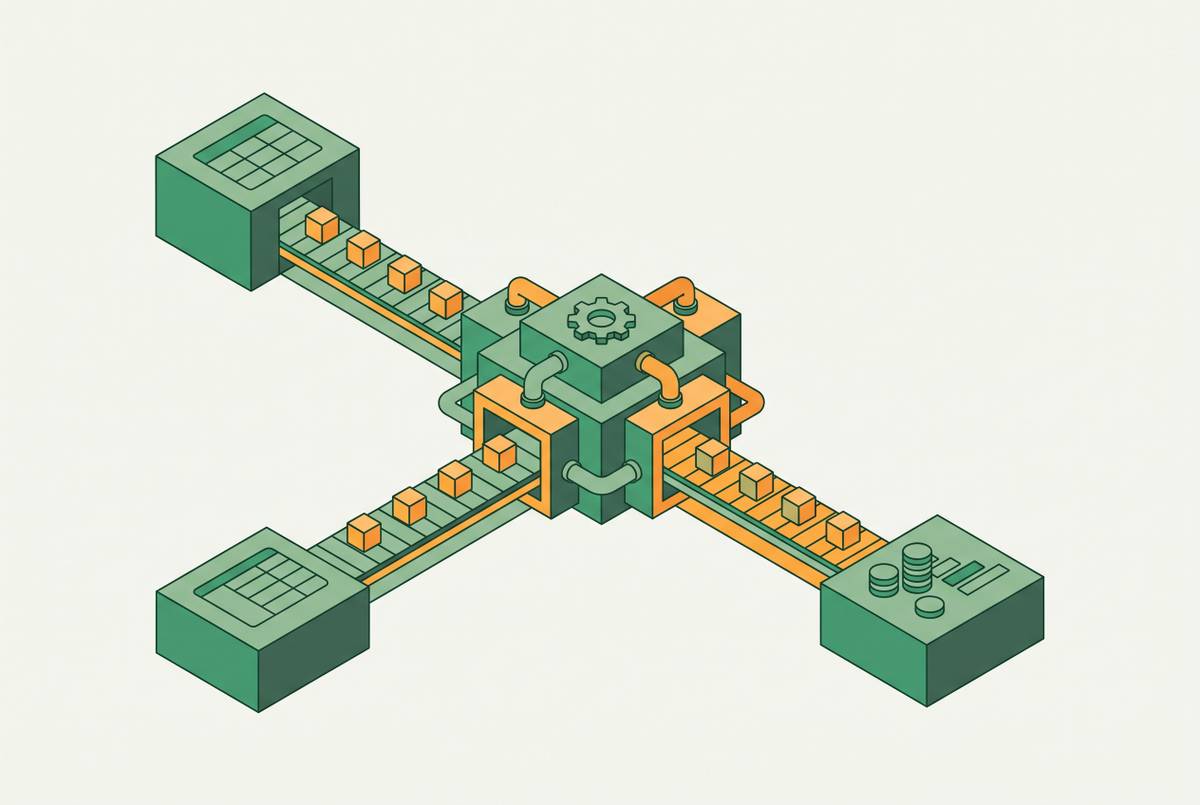
Commission plan approval workflows and locked pay periods are structural controls, not administrative formalities. They exist because commission errors compound on their own once a plan grows complex enough, and without a workflow that gates every calculation and a lock that preserves every finalized period, that compounding runs unchecked.
Why commission accuracy deteriorates without structural controls
Commission plans rarely start out complicated. They grow that way. Tiered accelerators get added to reward overperformance, territory splits get layered in as teams scale, clawbacks and SPIFs and draws and milestone-based payouts accumulate one at a time, each addition reasonable on its own. The arrangement works fine while the plan is simple and the team is small, but every added variable raises the odds that a calculation touches the wrong input, and the system becomes fragile as that variance grows. The moment this fragility turns into a real problem rarely announces itself. It appears only when something forces it: a new product line with a different margin structure, an acquired sales team running a different plan, a push upmarket that changes deal size and deal shape all at once.
The stakes are not confined to payroll accuracy. Compensation errors function as a retention risk because a majority of sales professionals would leave for a similar role elsewhere if it paid better. A rep who discovers they were shorted has a concrete reason to start looking, and a plan that cannot calculate itself correctly gives top performers exactly that reason.
What makes the absence of controls so damaging is that errors do not stay isolated to the period in which they occur. An overpayment in Q1 that nobody catches does not simply vanish into history. It becomes the baseline that Q2's calculations build on, carrying the mistake forward and compounding it. Overpayments, once paid, are close to unrecoverable in practice: clawing back money from a top performer is legally fraught and commercially self-defeating, so most organizations absorb the loss quietly rather than fight it. That absorption is itself a cost that never gets measured; the organization never learns how much its lack of controls is actually costing it.
Shadow accounting as a signal of a broken process
The clearest sign that a commission process has lost the trust of the people it pays is shadow accounting: reps building their own private spreadsheets to check whether the official system calculated their pay correctly. The scale of this practice is substantial. The Aberdeen Group found that shadow accounting can consume a quarter to half of a sales rep's monthly time, and Forrester puts the average payee time spent shadow-accounting at two hours a month. Neither of those numbers describes idle curiosity. They describe reps doing Finance's reconciliation work a second time because they do not trust the first pass.
Shadow accounting eventually surfaces disputes that cluster around a small number of recurring failures. SalesCookie's 2026 analysis found that wrong deal credited to wrong rep accounts for roughly a quarter of all disputes, quota or accelerator misapplication for roughly a fifth, and missing or duplicate deals for another fifth. These failures are the predictable failure modes of a system trying to track tiered, split, multi-variable plans without the structural controls built to catch them.
A newer complication is changing the shape of this problem rather than easing it. Reps can now generate commission calculations and dispute arguments in seconds using AI tools, and these outputs often sound confident while resting on incomplete or incorrect assumptions, producing hallucinated calculations that escalate disputes rather than resolve them. Because these disputes often arrive undisclosed, compensation teams lose visibility into how the challenge was actually framed, and that opacity compounds the usual dispute cycle: volume rises, resolution time stretches, and trust erodes on both sides of the table. The rep filing the dispute is not necessarily acting in bad faith. The tool handed them a confident-sounding number, and confidence is not the same thing as correctness. WorldatWork's data gives a sense of how widespread the underlying friction already is: roughly a fifth of sales reps file at least one commission dispute a year, and nearly a tenth of voluntary sales resignations trace back to compensation transparency issues. Shadow accounting is the visible symptom of a process that has not earned the trust it needs. It is the visible symptom of a process that has not earned the trust it needs, and the AI complication means that symptom is likely to get louder before structural controls catch up to it.
What a commission approval workflow does (the four-role structure)
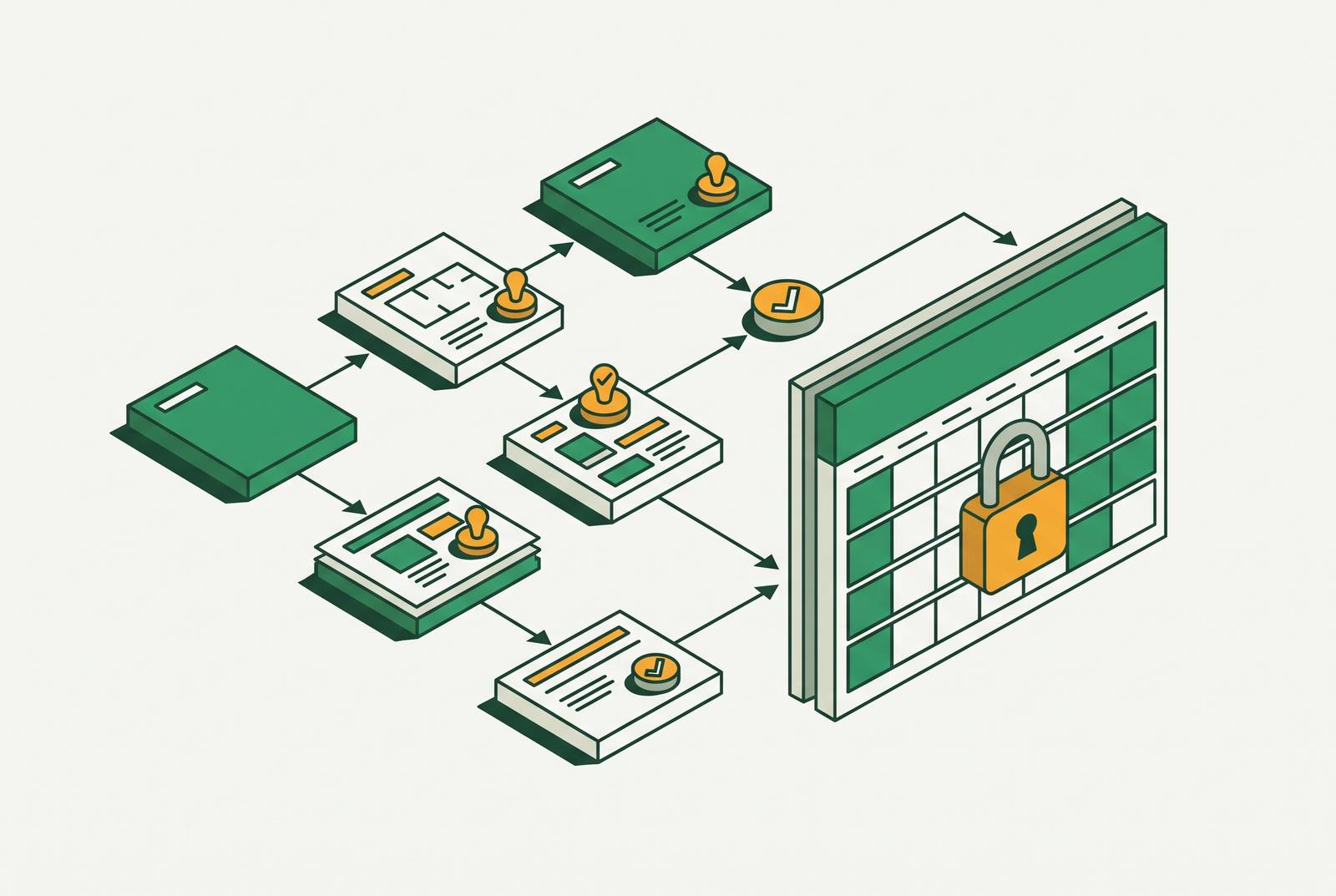
An approval workflow takes a calculated payout and turns it into a finalized, trusted number by routing it through defined roles, each with a distinct scope of authority. Velt's May 2026 breakdown of approval workflow components identifies four such roles: the requester, who submits the calculation and owns moving it through the process; the reviewer, who reads, annotates, and requests changes; the approver, who holds final sign-off authority; and the escalation contact, who serves as the tiebreaker when reviewers disagree or a deadline is about to slip.
Most organizations that build a commission approval process informally collapse the reviewer and approver roles into one, and that collapse is where the workflow typically breaks down. A reviewer's job is to flag issues; an approver's job is to unblock the work and let it move. When one person or one undefined role is asked to do both, feedback can no longer be sorted into "blocking" or "advisory," and the calculation stalls with no clear path forward. Separating the two roles is a bureaucratic necessity, since payees spend an average of two hours each month shadow accounting their commissions. It is what keeps a flagged concern from freezing an entire pay cycle.
The escalation contact role suffers from a different problem: it tends to get skipped entirely during setup, because nobody wants to plan for conflict before conflict exists. Then it becomes urgently necessary the day before a pay period closes, when two stakeholders disagree on a calculation and there is no defined mechanism to settle it. Defining the escalation path in advance, before any specific dispute exists, is the only way to make that mechanism available when it's needed rather than invented under pressure.
Routing logic determines who within this four-role structure actually sees a given calculation. Role-based approvals mean a manager can handle a small correction while a larger one, with bigger financial exposure, routes automatically to a director or a Finance leader. This is what prevents commission adjustments from becoming ad hoc: no change happens because someone happened to be available, every change happens because the structure routed it to the person authorized to approve it at that size and that risk level. QCommission's practitioner guide on commission adjustment workflows lists what happens in the absence of this structure: unauthorized changes slip through unnoticed, payouts become inconsistent across reps running similar deals, Finance cannot trace who approved what when an audit asks, and significant time gets lost chasing signatures, screenshots, and old email threads instead of doing the work itself.
Routing logic, intake standards, and escalation rules
Most delays in a commission approval cycle are caused by design failures, not people working slowly. They are caused by unclear routing, incomplete submissions, and escalation paths that were never defined, and each of those is a design failure rather than a staffing failure. An analysis of structured workflows found they cut approval cycle time to 1.8 days, roughly half what teams see when they run approvals through email and Slack. That gap exists because structure removes ambiguity about where a request should go next, and ambiguity is what produces delay.
Intake standards matter just as much as routing. A submission that reaches the review queue half-finished, missing the underlying calculation detail, a stated deadline, or the approval criteria specific to that request, forces the reviewer to stop and chase context before they can act. A submission bounced back most often because the reviewer lacked the context to evaluate it.
Commission workflows benefit from matching the routing pattern to the type of decision at stake. Sequential routing, where one reviewer signs off before the next sees the request, fits high-stakes changes that affect every rep on a plan, such as a change to plan terms, because each approval needs to build on the last one rather than happen in isolation. Parallel routing, where Finance and RevOps both review the same calculation at the same time rather than in sequence, cuts cycle time precisely because neither team's judgment depends on the other's. Conditional or threshold routing automates the decision of how a request gets escalated based on payout size or exception type, so that decision is made the moment the request is submitted and never requires someone to manually triage it later. Automated notifications when a request is assigned, paired with reminder triggers at set intervals, close the gap between a request being assigned and a request actually getting reviewed, without the requester having to chase anyone down.
The cost of getting this wrong compounds the same way it does in any delivery operation: when approvals stall, resources sit idle, downstream work stalls behind them, and the team waiting on sign-off starts to disengage from the process. In a commission context, that means Finance waits on Sales, payroll waits on Finance, and a pay period that should have closed cleanly slips closer to its deadline with every stalled handoff. Escalation paths have to survive the ordinary disruptions of running a business, vacations, competing deadlines, an approver who is simply unreachable for two days, so a workflow built on the assumption that every approver will always be available the moment they're needed is not a workflow at all; it needs a delegation rule and a timeout built in, so a single unavailable person cannot freeze an entire pay cycle.
Why locking a pay period is a distinct control
Approval workflows validate that a calculation is correct before it's paid out. Locking a pay period is a separate control that preserves that correctness after the fact, and without it, a number that was signed off correctly can still be revised later, which renders the entire audit trail meaningless.
Commission plans change throughout the year, and without a locked version history, there is no way to prove which version of the plan was actually in effect on the day a given deal closed. This is where a particular category of dispute originates, one that no amount of approval rigor can resolve after the fact, because the dispute is about which plan should have applied in the first place, not whether the calculation followed the plan correctly. The control that prevents this dispute from ever starting sits upstream of the lock itself: requiring e-signature on plan acknowledgment before the period begins eliminates the single most common version of this dispute, a rep claiming they were never made aware of the terms that applied to them.
Locking a period is what keeps its historical data tamper-proof once it closes. Purpose-built ledger features in commission platforms exist specifically to support this, built around ASC 606 and ASC 340 compliance so that month-end closes are audit-ready by design. The direction of the broader market points the same way. On September 7, 2026, a commission platform vendor announced new capabilities giving Finance and RevOps teams granular control and full auditability over commission accruals and accounting compliance, including deal-level attribution, historical rule versioning, and immutable audit trails. A vendor announcement treating immutable, versioned records as a headline feature rather than a backend detail says something about where the baseline expectation for this category now sits.
Finance's stake in the lock is concrete and specific. Every period needs three numbers to post correctly: comp expense, the cash cost; commission liability, what's been earned but not yet paid; and ASC 606 amortization, the capitalized commission on multi-year deals spread across the life of the contract. Each of those three numbers maps to a specific general ledger account, and if the period underneath them isn't locked, none of the three can be trusted for posting. GAAP compliance itself depends on this integrity: ASC 606 requires companies to capitalize qualifying incremental commission costs as assets and amortize them over the contract's life under ASC 340-40, which requires reliable access to detailed compensation data. If that underlying data can be changed retroactively, no amount of careful accounting on top of it can guarantee GAAP compliance or survive an audit.
What the full audit trail enables
Approval workflows and period locks produce a shared output: a complete audit trail. That trail is the operational record that makes dispute resolution fast, makes every commission correction defensible, and makes fundraising or acquisition diligence survivable rather than harrowing.
Without that trail, an adjustment dispute defaults to a credibility contest between Sales and Finance, with neither side holding documentation to settle it, and resolving that contest consumes management time that compounds across every subsequent disputed period. Teamwork's 2026 guide describes the same dynamic in a different context: when someone later disputes that an approval ever happened, a team running an informal process has nothing to point to, because the approval took place in a meeting or a Slack thread that cannot be reconstructed after the fact. A commission approval that lived in a hallway conversation is functionally indistinguishable, later, from an approval that never happened.
The stakes rise sharply at specific moments in a company's life. At moments like a Series C raise, an acquisition, or a SOX audit, commission data quality becomes a direct diligence question, and a broken or incomplete trail is a finding that diligence teams are specifically trained to flag. A company that has never had to produce its commission history under scrutiny may not realize how exposed an informal process leaves it until the moment someone asks for that history and it doesn't exist in reconstructable form.
Protecting the integrity of the trail itself carries its own baseline requirements: an audit log on every change, capturing who made it, when, what specifically changed, and the before-and-after state; encryption in transit and at rest, meeting at least TLS 1.2 and AES-256; and certification at SOC 2 Type II at minimum, with ISO 27001 for teams operating globally. These baseline requirements are what make the trail itself trustworthy enough to survive the scrutiny described above.
How Finance, RevOps, and Sales interact with the workflow
Commission management sits at the intersection of three teams whose incentives do not naturally align, and a workflow built around only one of them will generate friction with the other two. The design principle that resolves this tension in practice is a clear division of ownership: RevOps owns the rules, and Finance owns the numbers. Plan logic lives in a configurable rule builder that RevOps maintains, calculations reconcile against live CRM and ERP data, and Finance's role is to review, approve, and export the resulting numbers.
That division only works if it's made explicit. A commission platform still needs a named business owner, and Finance, RevOps, Sales Operations, and IT need to agree upfront on who is responsible for interpreting the plan, who owns the source data, who validates the calculation, who holds approval authority, and who administers the system itself. Ambiguity at any one of those handoff points is where the process breaks down in practice, because nobody was assigned the decision.
Sales' stake in this structure is visibility. Reps need real-time insight into their own earnings, their quota progress, and the deal-level detail behind their statement. Opacity in any of those three is what produces shadow accounting in the first place; transparency is what removes the reason for it to exist. Finance's stake is comp expense, commission liability, and ASC 606 amortization flowing accurately into the general ledger, and that accuracy is the direct downstream consequence of every approval and locking decision made upstream of it.
The CRM is where a large share of cascading errors actually originate. Without real-time sync between the CRM and the commission calculation engine, the manual handoff between CRM and commission calculation is where cascading errors originate: a rep changes territory mid-quarter, a deal gets amended after export, or a refund is processed after cutoff, and these introduce data drift that approval workflows cannot catch if they are reviewing stale inputs. An approval workflow reviewing a calculation built on stale inputs cannot catch any of this, because the problem happened before the workflow ever saw the data. Bidirectional sync with the CRM systems in common use, Salesforce, HubSpot, Microsoft Dynamics, means a change in deal status, contract value, or a cancellation updates automatically and preserves data integrity before the calculation ever enters the approval queue.
What to look for in a commission platform's architecture
Every argument made above rests on the platform underneath it actually being built to support it. Approval workflows and period locks are only as strong as the architecture carrying them, and surface-level workflow features without real versioning, genuinely immutable logs, and CRM integration cannot deliver the integrity this piece has described.
A few criteria separate platforms that have built for this from those that have added workflow features on top of a weaker foundation:
- Rule versioning with effective dates: the platform has to record which plan version applied on a specific date, not simply display whatever the current plan says.
- Deal-level attribution: every payout needs to trace back to one specific deal, one specific version of the governing rule, and one specific approval action, so that no number in the system floats free of its origin.
- Immutable audit trails: once a period closes, its historical records cannot be edited retroactively, by anyone, under any permission level, which is the only way the lock described earlier can mean what it claims to mean.
Evaluated against these three criteria, the gap between a platform that merely offers an approval button and one built around structural integrity becomes obvious fairly quickly.