Salesforce Deal Data Quality for Commission Calculation
Dirty Salesforce data undermines commission accuracy and rep trust.
Commission software for mid-market RevOps and Finance teams should make Salesforce inputs inspectable, calculations traceable, and approved pay periods immutable. Salesforce Deal Data Quality for Commission Calculation explains why those safeguards matter. Commission accuracy starts with the CRM records used in the calculation, so a process people can trust must stop source errors and show any that remain before statements reach reps.
Why Salesforce deal data is the actual input to every commission calculation
A rep challenges a commission statement, and the explanation turns out to be a Salesforce field nobody noticed was wrong. The engine used the configured rate correctly, but the deal had the wrong amount, owner, or close date. Reviewing the formula cannot resolve that kind of discrepancy because the formula did not cause it. The investigation has to return to the record that supplied the calculation.
Whether deal data comes in through a file upload or direct CRM sync, its values are what the system uses to calculate commissions and build statements. Quota Queue and similar end-to-end commission platforms are only as accurate as the records feeding them. Even a sophisticated rule cannot tell that an ownership field which looks complete names the wrong rep. Salesforce data quality is therefore a compensation operations responsibility as well as a concern for the data team. The people running the commission cycle must govern the upstream fields on which pay depends.
The specific ways Salesforce deal data goes wrong, and why each one matters for commissions
Incomplete records leave the engine without a value it needs. A missing amount, product line, or close date can cause a deal to be skipped, default to zero, or match the wrong rule tier. Incorrect ownership creates a different failure because the calculation can run cleanly while credit intended for the replacement goes to a departed rep. Duplicate deals can produce double credit, while fragmented account records can produce splits that match neither the contract nor the plan.
Inconsistent field values break exact rule matching. Product categories entered as “Enterprise,” “ENT,” and “Ent - New” can send otherwise equivalent deals through different rate, accelerator, or SPIF rules. Incorrect close dates move credit between pay periods and distort quota attainment. Stale records keep old territory assignments or contract values, so a record can look complete even when its values are wrong. Commission tools, including Quota Queue, can flag and set aside records that may be wrong before a period is locked, but validation still needs upstream values it can trust to check them against.
Why these errors keep reappearing despite repeated cleanup efforts
A cleanup fixes the records already there without changing how new records are created. Reps are rewarded for closing deals rather than keeping data clean, and when time is short, they may skip fields, use inconsistent values, or make mistakes when copying data. This is a structural mismatch between the purpose of the work and the care the downstream calculation requires. Treating recurring errors as individual carelessness leaves that mismatch intact. Standards have to hold at the point of entry.
Integration syncs add another route for error. Field mismatches and sync failures can bring wrong source values into Salesforce even when the record they create looks valid. Rep turnover, territory realignments, and quota resets then make previously correct assignments obsolete. Unless those events trigger systematic updates, orphaned records accumulate until the commission run exposes them. For a workflow feeding Quota Queue or another commission platform, sustainable quality therefore means governing record creation and change continuously rather than repairing the export at the end of each period.
How data errors travel from Salesforce into commission outputs, step by step
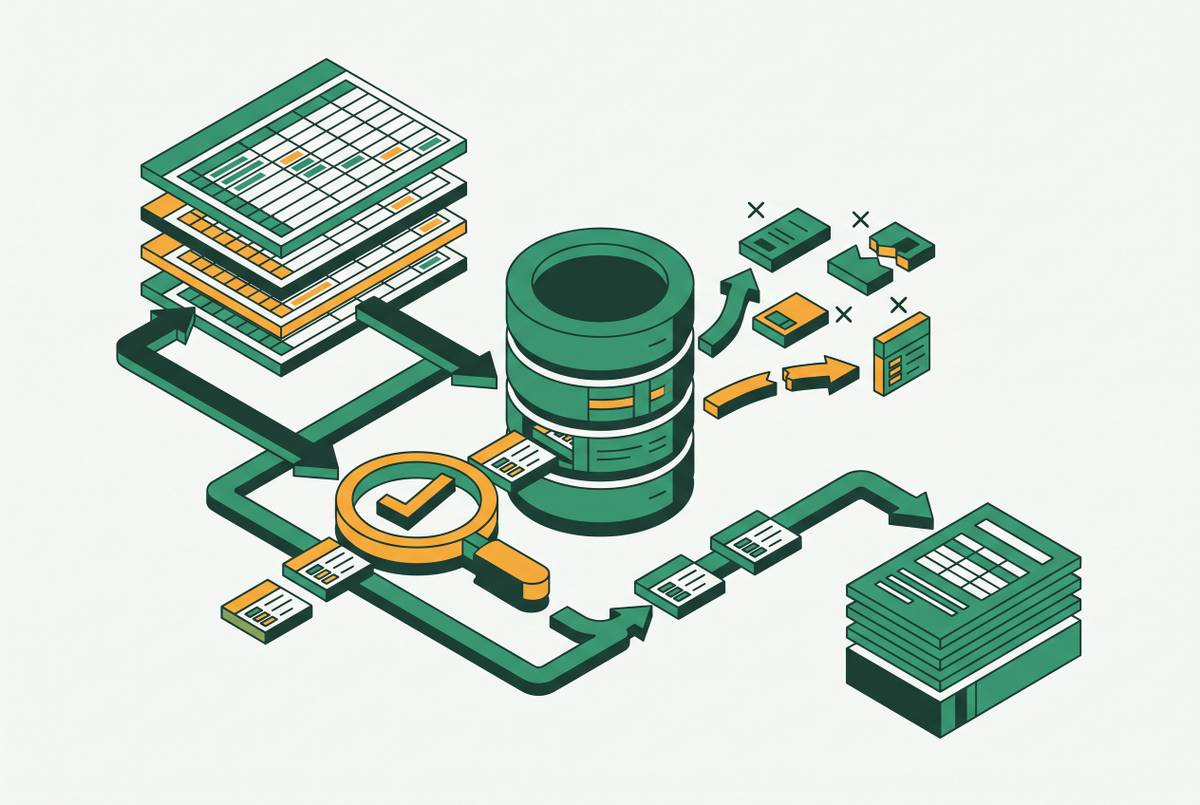
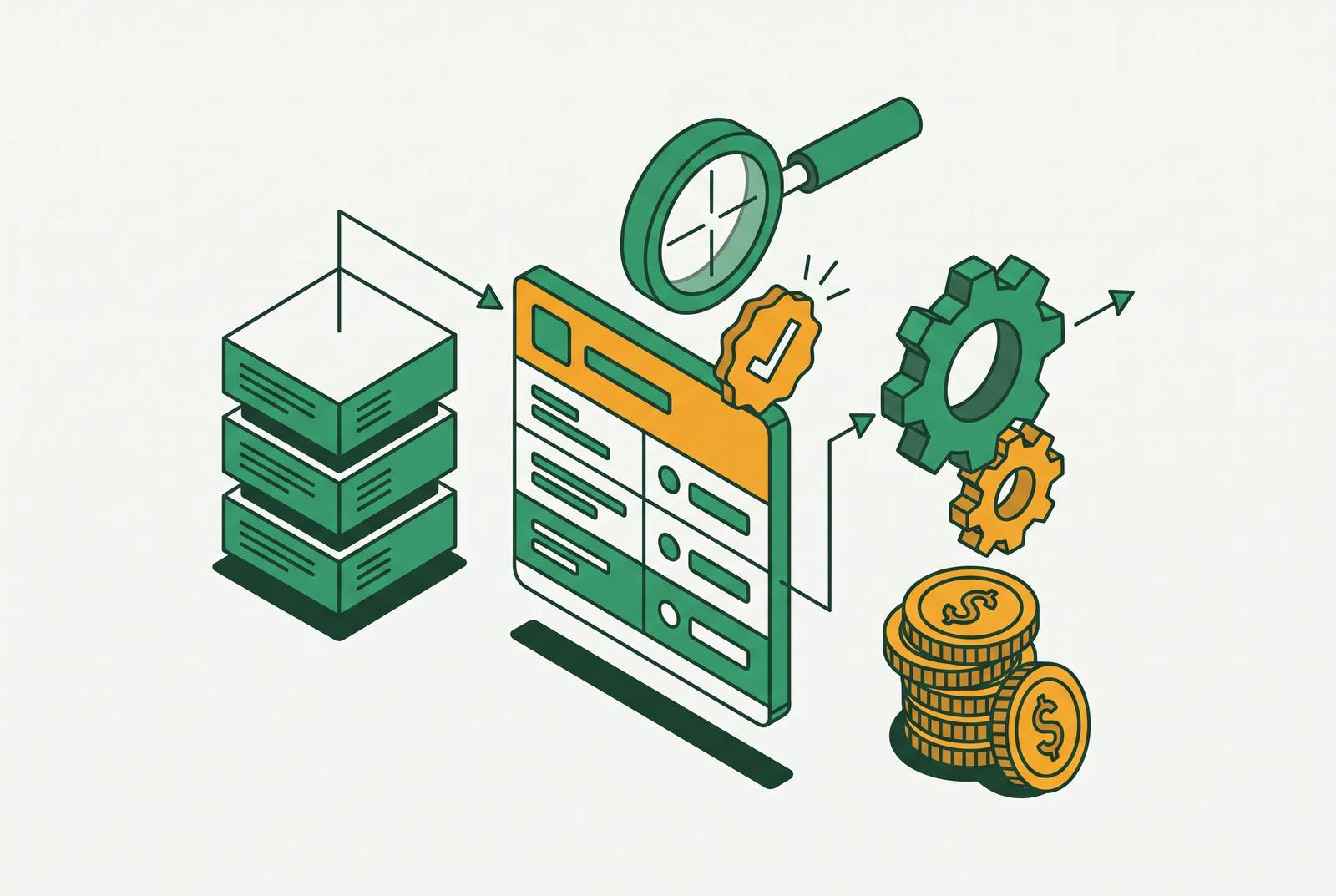
The chain begins when the commission system imports the values present in Salesforce at the time of sync. It then uses fields such as owner, product, amount, close date, and territory to match each deal to a plan rule. Rates, accelerators, SPIFs, and splits are applied to that match. The resulting statement can be internally consistent even when its source record is wrong. If the evidence behind a payout is hidden, the final number alone may give no sign of the error.
Consider a hypothetical deal that closes on December 31 but is recorded with a January 2 close date. The import carries January 2 into the commission system, so rule matching places the deal in the wrong pay period. If the rep would have earned a Q4 accelerator but is below quota in the January period, the date error changes both timing and payout. The engine can calculate that result exactly as configured.
What bad commission data costs — in disputes, trust, and rep behavior
When a rep cannot reconcile a statement with the deals they closed, RevOps has to reconstruct the path from record to payout. That work diverts attention from the next close and delays resolution of the current one. If the same doubts come back, the rep may keep a separate spreadsheet to check the official result. Shadow accounting is not just duplicated administration. It signals that the compensation process has lost authority and that selling time is being spent verifying pay.
Underpaid reps have a reason to raise discrepancies, while overpayments can remain unreported until a later review or an awkward clawback. When errors run across several periods, finance has to correct the affected statements and unwind months of accruals. For the rep, a delayed correction compounds the sense of financial harm. Repeated unexplained discrepancies can ultimately contribute to attrition, connecting an overlooked Salesforce field to the loss of commission trust and, eventually, the rep.
The commission-critical Salesforce fields that deserve active governance
The first audit should focus on fields that set eligibility, credit, timing, and value, leaving the rest of the CRM for later cleanup. Close date determines the pay period and can change quota attainment or accelerator eligibility when edited retrospectively. Deal owner, co-owner, and split fields determine who receives credit and in what proportion. Rates are based on the amount and contract value fields, so placeholders, partial values, and wrong currencies change the result. These fields deserve attention before less consequential gaps in record completeness.
Opportunity stage shows whether a commission trigger has occurred, including a move to Closed Won when the plan pays at that stage. Inconsistent stage use or uncontrolled backward movement can therefore misfire the trigger. Product and line-item fields determine differentiated rates by product, segment, or deal type. Territory and account assignments also matter when quotas or split rules depend on them. Salesforce has validation rules, required fields, and duplicate controls built in to help protect these inputs before they are used in calculations.
How to build a Salesforce data governance routine that holds through the commission cycle
The commission close should be the forcing function for a repeatable review. Before syncing the period’s Closed Won deals, confirm a valid owner, a close date within the period, a non-placeholder amount, and a populated product or segment field. Assign RevOps responsibility for deal identity and structure, with finance responsible for the audit and compliance review.
When records are entered, use stage-gated validation rules to make sure commission-critical fields are filled in before a deal reaches Closed Won. Apply duplicate rules where supported and configure duplicate detection around commission-relevant records and matching criteria, including account name, deal name, close date, and amount. Every departure, hire, and territory reassignment should also trigger an ownership audit of affected open and recently closed records. Run field-level completeness checks before every pay close, broader duplicate and ownership audits quarterly, and a field-usage and validation rule review annually. This cadence separates immediate payout risk from controls that need a wider review.
Why AI tools in the commission and CRM stack amplify the data quality problem rather than solving it
AI-assisted quota modeling, deal scoring, and commission plan design all rely on the data they get from the CRM. Incomplete, inconsistent, or stale inputs can therefore influence recommendations as well as individual payouts. A confident output does not establish that the source records were correct. Adding AI to the stack raises the stakes for governance.
That does not make AI assistance without value. Extracting quotas, rates, tiers, and accelerators from existing plan documents can help build a proposed plan for human review. However, extracting the plan’s terms is separate from verifying the Salesforce records against which those terms will run. Human approval of the plan cannot substitute for review of the data, and approval of the data cannot establish that the plan was interpreted correctly. Both must be approved before AI-assisted work can be used in an approved commission process.
What should commission software for mid-market RevOps and Finance teams do with Salesforce data?
A trustworthy platform should expose the deals it imported, the source fields, and the values used in calculation. It should then connect each statement line to the deal record, credit, and rule version that produced it. Those capabilities distinguish a traceable calculation from a number that merely looks plausible. For a team outgrowing spreadsheets, they are more useful evaluation criteria than calculation sophistication alone.
The platform should also separate draft calculations from published results and preserve approved inputs in locked pay periods. Otherwise, a later Salesforce edit can undermine the record of how a finalized payout was derived. As one concrete option, Quota Queue brings CRM or file imports into a single calculation engine with line-by-line payout evidence and periods locked and approved before export. The practical test is whether a rep can follow a payout back to the exact deal and field values without asking RevOps to reconstruct the math.
The pay transparency compliance dimension: why documented, traceable commission data is now a legal requirement in some jurisdictions
California, New York, and Illinois have enacted job-posting requirements involving salary ranges, with some requirements also covering a general description of benefits and other compensation such as bonuses and incentives. These obligations make accurate commission documentation more important. However, a disclosure requirement should not be treated as proof that every jurisdiction mandates a particular commission audit architecture. The applicable obligation matters as much as the quality of the supporting record.
For commission operations, traceability shows how the terms on record led to the payment that was made. A payout that cannot be linked to a deal, plan version, and rule is difficult to explain or substantiate. A spreadsheet whose formulas change without an audit trail, or whose prior versions are overwritten, leaves that explanation incomplete. Locked periods and versioned plan records preserve the basis of the calculation. Where applicable requirements call for documented and traceable commission terms, those controls help make compliance demonstrable rather than dependent on reconstructing past decisions.
A practical sequence for closing the Salesforce-to-commission accuracy gap
Start before the next pay close with a completeness and consistency report covering close date, owner, amount, stage, and product for the current period’s Closed Won deals. Resolve those errors before syncing the records to the commission system. Then implement validation rules on commission-critical stage transitions so the same missing fields cannot pass through again. Establish an ownership audit protocol for departures, territory changes, and new hires. This sequence addresses the current payout first and then reduces the flow of new errors.
When moving from spreadsheets to a commission platform, run one full pay period in both systems and reconcile the outputs line by line before cutover. That comparison can expose mapping errors that emerge only when real records meet real rules. After approval, lock the period and preserve the deal inputs and rule versions so later Salesforce changes cannot rewrite finalized statements. Finally, let reps see the deal, credit, and rule behind each payout on their statements. The goal is a commission process in which every number is traceable, every rep can follow the math, and finance can close the period without a fire drill.