Commission Data Encryption and Security Standards for Payroll Systems
Commission data needs the same encryption and access controls that payroll already uses.
Commission data is compensation data, plain and simple, and it deserves the same encryption, access control, and audit standards that payroll systems already treat as table stakes. Most companies don't run it that way. A commission statement holds individual earnings by deal, quota attainment, plan structure, variable pay rates, accelerator thresholds, and clawback terms, and that's a list that overlaps almost entirely with what payroll departments guard closely: salary figures, bonus structures, tax codes. Commission Data Encryption and Security Standards for Payroll Systems.
Commission data's place in the same security category as payroll data
Look at what actually sits inside a commission record. It's a specific dollar figure tied to a specific person, not an abstract sales metric or a dashboard number. It's a specific dollar figure tied to a specific person, broken down by deal, with the underlying formula (tiers, accelerators, clawback conditions) sitting right next to it. Compensation and benefits data, including bonus structures and salary history, is already classified as one of the sensitive tiers of payroll data, and there's no meaningful argument for treating commission records any differently. The fields are the same category of information; they just live in a different system.
The financial consequences of a breach don't discriminate by which department's spreadsheet got exposed, either. The average global cost of a data breach now sits close to $4.44 million, and that number applies just as much to a compromised commission database as it does to a payroll one. Beyond the direct breach cost, there's a second layer of exposure that's specific to commission data: plan structure itself. If a competitor gets a look at your accelerator rates, SPIF targets, and tier cutoffs, they've just learned how you motivate your sales force and can underbid your incentive design to poach reps.
None of this is treated with the seriousness it warrants, in practice. Commission data tends to live in shared spreadsheets, email attachments, and general-purpose drives, places with no encryption, no access logs, and no audit trail worth the name. That gap between how payroll handles sensitive numbers and how commission handles the same category of numbers is the actual subject of this piece.
What payroll-grade security requires, translated into concrete standards
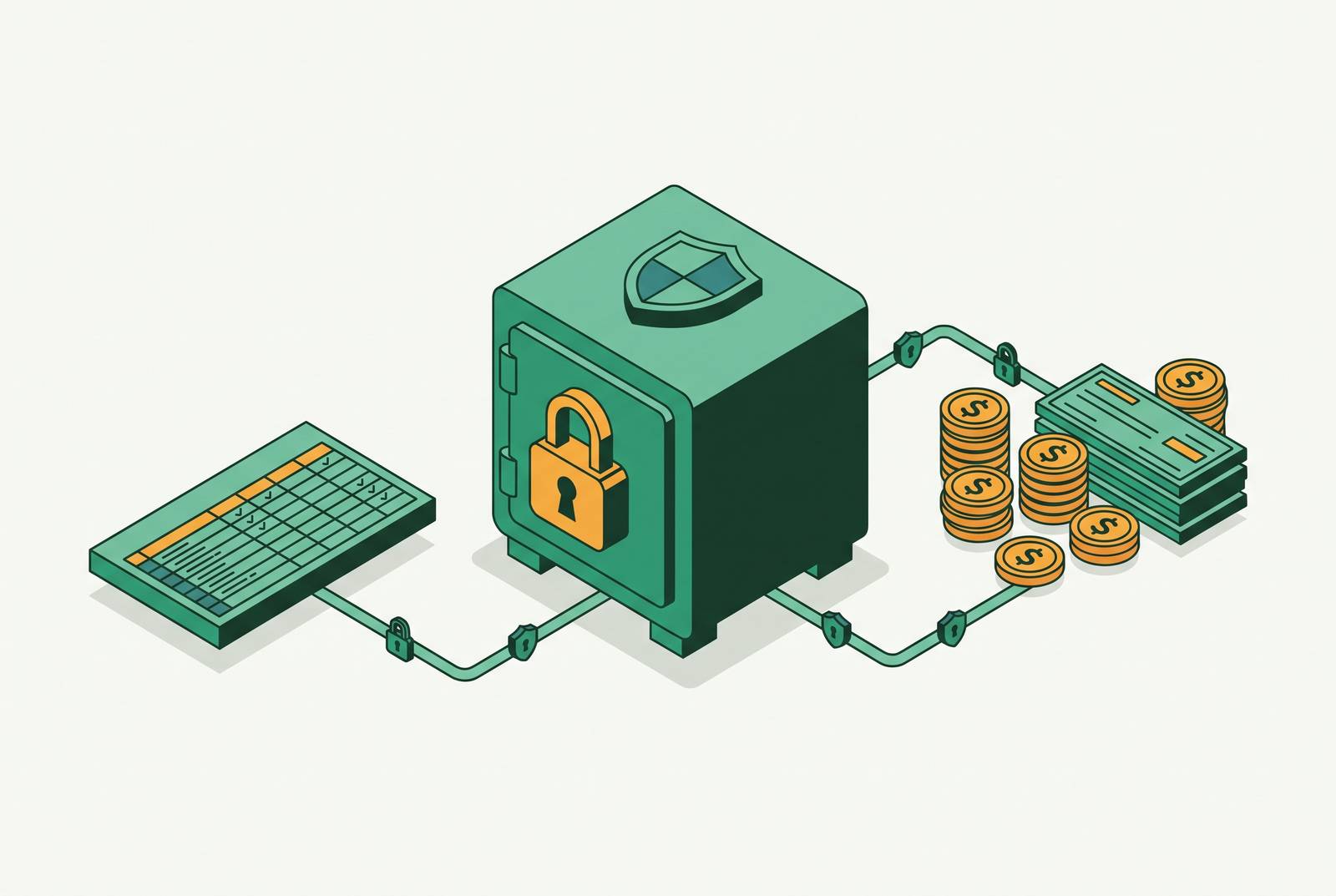
Start with encryption, because it's the floor, not the ceiling. Leading payroll platforms encrypt data at rest with AES-256 and protect data in transit with TLS 1.3 plus Perfect Forward Secrecy. AES-256 is the accepted baseline at this point, nothing exotic. Every session gets its own unique encryption key, so if an attacker somehow gets hold of one key, they can't turn around and decrypt a backlog of past traffic. That's a real operational safeguard vendors implement to ensure the phrase means something concrete, beyond sounding serious on a landing page.
Encryption alone doesn't stop the wrong person inside your own company from seeing data they shouldn't. That's where zero-trust architecture comes in: the model assumes a threat could originate from inside the network just as easily as outside it, so nobody, no user, no system, gets trusted automatically. Paired with the Principle of Least Privilege, this becomes a workable framework for commission data specifically: each person gets only the access their specific role calls for, and that access disappears the moment their role changes or they leave. A rep should see their own statements and nothing more. A manager sees their team's numbers. Finance sees aggregates across the org. Nobody should be sitting on blanket access to every commission record in the company by default. Multi-factor authentication is a given in any payroll-grade system at this point, and adaptive authentication, where the system raises its requirements based on context and perceived risk, is becoming standard practice too.
Then there's the question of how you verify any of this from the outside, since a vendor telling you their system is secure isn't the same as proving it. That duration is the entire point. A Type I report just confirms controls existed on one particular day; Type II confirms they worked continuously over a real observation window. So when evaluating a commission platform, the question to ask isn't whether it has SOC 2. It's whether it has Type II, and not just Type I or a vendor's own self-attestation.
Integration platforms that rely on "sync-and-cache" architectures create what's sometimes called shadow data, normalized copies of sensitive information sitting in environments the customer's security team doesn't control. Any commission tool pulling deal data from a CRM or ERP raises the same question: after the sync runs, where does that copy actually live, and who controls it? Supply chain vulnerabilities, breaches that happen through a third-party platform rather than the primary system, apply directly to commission software sitting between CRM and payroll.
The regulatory environment that now formally covers commission and compensation data
The legal landscape here is uneven, and that unevenness matters. California already treats payroll data as protected personal information under its privacy law, while states like Colorado and Virginia currently carve out an exemption for employment-context data, so most existing state privacy laws leave payroll and compensation records outside their scope for now. That's expected to shift as more states pass comprehensive privacy legislation, but as of today, California stands largely alone in fully extending these protections to payroll and, by extension, commission records. Where these expanded rules do apply, they typically require data-retention limits, employee access to their own records, encryption and cybersecurity standards, and vendor-risk assessments, none of which most commission spreadsheets are built to satisfy.
The dollar figures attached to noncompliance aren't abstract, either. Recent privacy enforcement actions in the U.S. have produced penalties running from $2,500 to $7,500 per affected individual, and separately, 53% of companies have already been penalized for payroll noncompliance within the last five years, with the average annual cost of noncompliance, fines, back wages, penalties, internal remediation, running past $845 per employee. Running that per-individual penalty against a commission system tracking every active rep on a sales floor makes the math scale fast: a single breach at a company with a few hundred reps is a real liability event rather than a rounding error.
Multi-state sales organizations carry an extra layer of complexity on top of all this. Every state sets its own definitions, timelines, enforcement mechanisms, and penalties, which means compliance isn't a project you finish once, it's something that needs continuous monitoring as reps and regulations both move. A company with reps in a dozen states may find a single commission record subject to several overlapping regimes at once. And for teams with an international footprint, the European Commission specifically names payroll administration as an example of personal data processing under GDPR guidance, which means commission data processing creates privacy obligations for internationally distributed sales teams.
Commission data exposure points across a typical workflow
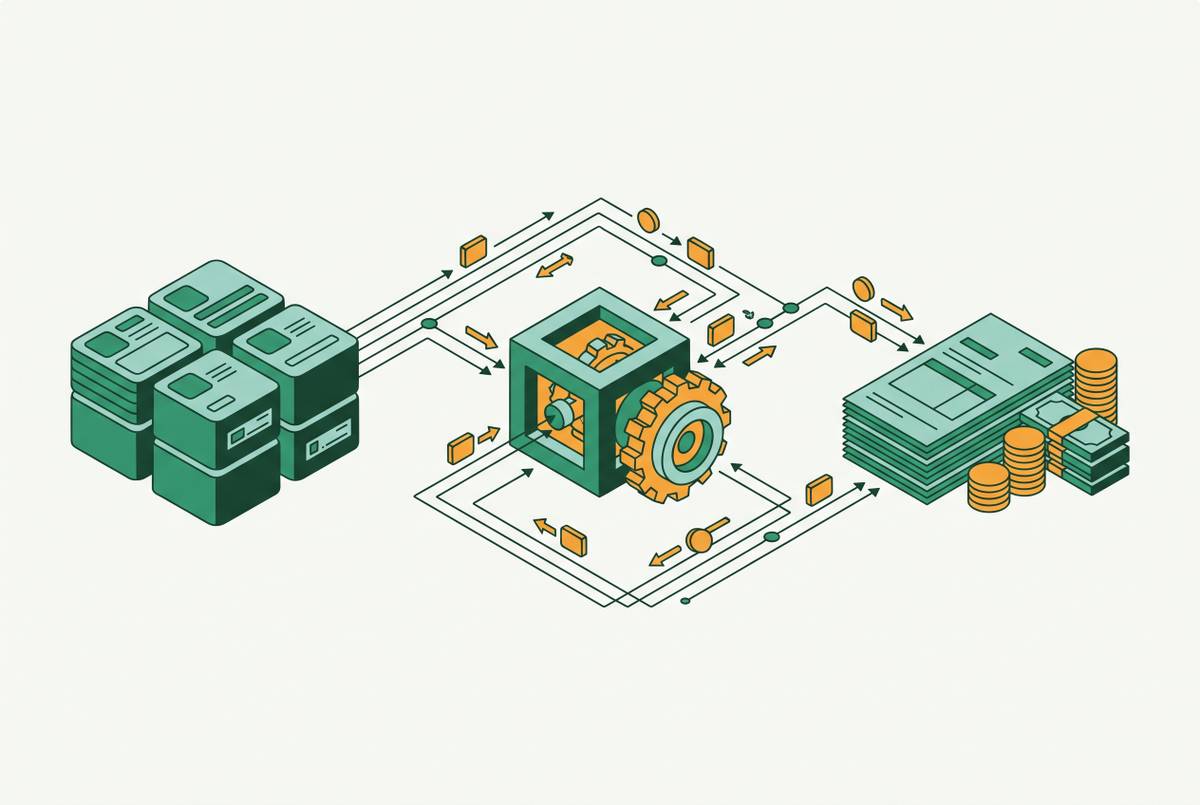
Trace the actual path a commission dollar takes and the exposure points become obvious. Deal data gets pulled from the CRM first: rep attribution, deal size, close date, product mix. Compensation plan logic then gets applied on top of that raw data, tiers, accelerators, splits, SPIFs, clawback conditions. From there, statements go to a manager and Finance for review, then get locked for the pay period, and finally, the approved totals move over into payroll for actual disbursement. From CRM to commission statement to payroll, every handoff, CRM export files, calculation workbooks, emailed statements, payroll import files, is a potential exposure point.
The spreadsheet-based version of this workflow, still the norm at plenty of companies, fails at nearly every one of those steps. A shared Excel file has no encryption at rest, no access logging, and no real version history showing who changed a number and when. Commission statements emailed out to reps frequently travel without any TLS enforcement guaranteeing the message stays encrypted along the way. And role separation is often nonexistent: the same file a manager opens to check a number is often the exact file Finance is editing, which is often the same file that eventually lands in an executive's inbox. This isn't a hypothetical fragility. Research from the European Spreadsheet Risks Interest Group found that 50% of spreadsheet models used operationally in large businesses contain material defects, a figure about accuracy, but the same structural weakness that produces calculation errors also produces uncontrolled access https://www.certinia.com/resources/industry-101/complying-with-asc-606-and-ifrs-15/.
That fragility is a risk that's been actively exploited. It's been actively exploited. A payroll manager at one company stole $2.5 million over time by reimbursing false expenses to herself, and in a separate case, a manager invented a ghost employee who collected pay across 22 pay periods before anyone caught it. Both schemes worked precisely because there was no audit trail and no separation of duties standing in the way, the exact controls a properly built commission system would enforce by default. Beyond insider fraud, payroll and compensation departments are now documented targets for Business Email Compromise 2.0 and deepfake voice phishing, attacks built specifically to exploit the trust embedded in financial workflows. And every time a commission file gets downloaded, forwarded, or printed, a fresh untracked copy exists somewhere outside any security perimeter, permanently.
There's a compliance dimension layered on top of all this for companies subject to revenue recognition rules. Without an audit trail, reconstructing how a given commission figure was calculated turns into its own costly side project the moment an auditor asks for it. S1 states that commission calculations feed directly into revenue recognition and cost capitalization under ASC 606/IFRS 15, and errors in the underlying calculation create restatement risk.
The specific security controls a commission platform should provide
Encryption comes first and isn't negotiable.
Tenancy design matters just as much, particularly for any platform running multiple customers on shared infrastructure. One customer's commission data should never sit in the same logical space as another's, and logical separation on paper isn't the same guarantee as genuine isolation in the underlying architecture. The direct question for a vendor is whether customer data lives in a shared schema or in isolated tenants, and a vague answer here is itself a signal.
Role-based access needs to be granular. Reps should see their own statements and quota progress, full stop. Managers get visibility into their team's aggregates plus rep-level detail within their own span of control. A separate audit role gets a locked, read-only view into approved pay periods with a complete log of who approved what and exactly when. And access revocation on role change or termination has to be automated, not something that depends on someone remembering to update a permissions list.
Finally, every calculation change, override, approval, and export needs a timestamp and a name attached to it. Once a pay period gets approved and locked, the record should be genuinely immutable, no quiet edits slipped in after the fact. This is the direct commission-side equivalent of duty separation in payroll, and it matters for fraud prevention and for surviving an audit intact. TLS 1.3 is used in transit for all data movement (CRM imports, user sessions, payroll exports). Is PFS enforced?
The audit trail as the security control most specific to commission workflows
Base salary barely moves month to month. Commission does, constantly, and that's what makes the audit trail a different animal here than in ordinary payroll. A single statement at the end of a pay period can reflect dozens of separate calculation decisions, deal timing, split adjustments, a clawback triggered by a return, an accelerator threshold crossed halfway through the month, and every one of those decisions needs to be traceable back to its source if anyone asks.
When that trail doesn't exist, disputes simply can't get resolved cleanly, and trust erodes fast. 62% of sales reps already run their own shadow-accounting spreadsheets just to double-check what they're being paid, and the reason isn't idle curiosity, it's distrust of the official number https://blog.salescookie.com/2026/07/08/shadow-accounting-in-sales-why-62-of-reps-verify-their-own-commissions/. When a rep challenges a payout and Finance can't produce the exact logic that produced that figure for that deal, nobody wins the argument: Finance can't defend the number, and the rep has no reason to believe it. That failure has a measurable cost attached to it. 83% of companies report losing sales reps specifically over inaccurate commissions, and a transparent, verifiable audit trail is the direct fix for the trust breakdown driving that attrition https://www.fullcast.com/content/cost-of-bad-commission-tracking/.
The same control closes off the internal fraud angle, too. The false-expense scheme and the ghost-employee case described earlier both worked because nobody was watching for exactly this kind of gap. A commission system that requires a named approver on every locked pay period, timestamps that approval, and blocks silent edits afterward removes the opening those schemes depended on.
None of this sits purely in best-practice territory anymore, either. Organizations are expected to keep accurate payroll records and timekeeping data for whatever retention period applies, and incomplete documentation creates its own compliance exposure independent of any breach. Commission data is compensation data. Regulators are gradually catching up to that fact, and the companies still running it through unencrypted spreadsheets and email attachments are the ones who'll feel that catch-up first. PrimePay research found that 53% of companies have been penalized for payroll noncompliance in the last five years https://primepay.com/blog/payroll-security/. PrimePay research found that the total annual cost of payroll noncompliance per employee, including fines, back wages, penalties, and internal fixes, is $845 per employee https://primepay.com/blog/payroll-security/. Iris Global research found that penalties from recent privacy enforcement actions in the United States range from $2,500 to $7,500 per affected individual https://www.irisglobal.com/blog/payroll/2026-payroll-compliance-update/. Uncle Kam / Payroll Software Security found that the average response time for incident response on platforms like Ceridian Dayforce with automated incident response playbooks is 15 minutes https://unclekam.com/tax-pro-tools/payroll-software/payroll-software-security/.