Commission Software Security Certifications and Data Handling
Commission data demands stricter security vetting than typical SaaS software.
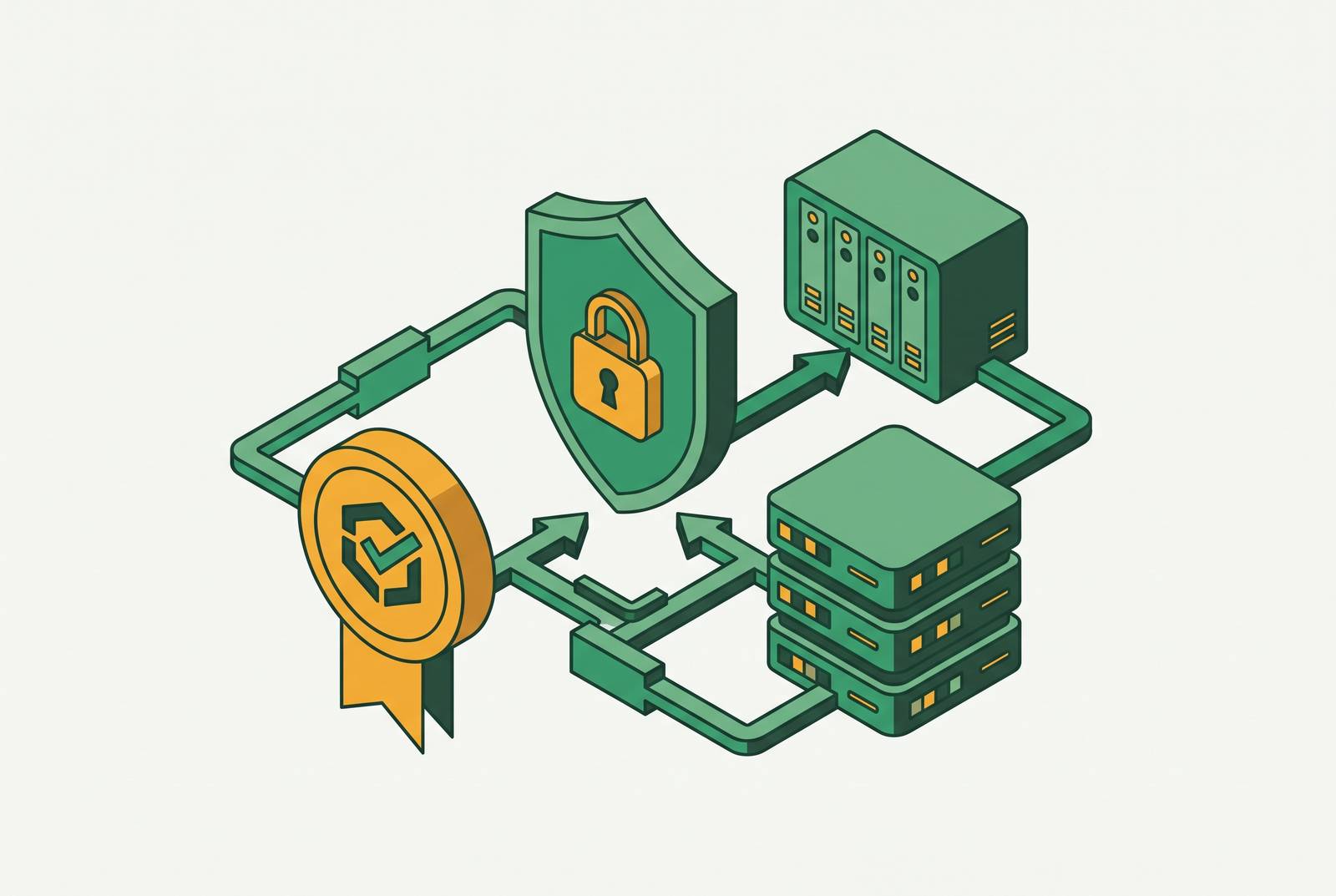
Commission data is compensation data, and that single fact changes how it ought to be secured. Most buyers never make the connection. A commission record ties a named person to their deal history, quota attainment, payout amount, and often territory and customer detail, which makes it more sensitive than nearly anything else a SaaS vendor touches. Buying commission software the way you'd buy a project management tool means asking the wrong questions from the start, because the downside here includes employment law exposure alongside the usual data privacy checklist.
The UK's Information Commissioner's Office handed the industry a case study in 2024, whether anyone asked for one or not. It issued a provisional fine of £750,000 against the Police Service of Northern Ireland after a spreadsheet disclosure error exposed personal information tied to personnel records. No hacker, no malware — a file sent to the wrong recipient, a structural failure rather than a malicious one. Commission data carries the same blast radius. A spreadsheet with quota attainment and payout figures, sent to the wrong internal list or the wrong external partner, causes breach-level damage through a far more boring failure mode. That's the risk buyers need to actually evaluate, and it's why this piece treats certifications and data-handling practices as one question, not two separate boxes to check.
What SOC 2 actually audits, and what the Type II label specifically verifies
SOC 2 comes out of the American Institute of CPAs and evaluates how a service organization handles data and secures its systems. Underneath it sit five Trust Services Criteria: Security, Availability, Processing Integrity, Confidentiality, and Privacy. Security, sometimes called the Common Criteria, is mandatory for any SOC 2 report. The other four are elective, and a vendor picks whichever apply to its own customers. That's how two companies both say "SOC 2 compliant" while having audited almost nothing in common.
The Type I versus Type II distinction gets waved away in sales calls constantly, and it shouldn't be. A Type I report is a snapshot: an auditor looks at control design on a given day and confirms the policy exists and reads sensibly on paper. Type II checks whether those controls held up over a sustained window, usually six to twelve months, a different kind of claim, and a longer observation period rather than a longer version of the same document. For a commission buyer, that distinction is the whole point of asking. Type II tells you encryption, access control, logging, and change management got followed consistently over time, not just written down once in a binder that nobody opened again.
Pull an actual SOC 2 Type II report and you'll find an auditor's opinion letter, a description of the system and controls in scope, and a record of the tests run, exceptions included. Exceptions aren't automatic disqualifiers. No vendor is perfect, and auditors expect to find something; what matters is the nature of the exception and how the vendor responded to it. SOC 2 doesn't prescribe technical standards, though. No mandated encryption algorithm, no mandated key length. Two vendors can both hold spotless Type II reports while encrypting customer data in ways that aren't remotely equivalent to each other.
The five Trust Services Criteria, and which ones actually matter for commission data
Security, the mandatory one, covers logical and physical access controls, monitoring, incident response. For a commission platform the real question is narrower than any of that: who inside the vendor's own infrastructure can see individual earnings records, and are production databases kept separate from the staging environment where engineers are still testing code.
Confidentiality speaks most directly to multi-tenant SaaS risk. It covers protection against unauthorized disclosure, and for commission software that means one customer's payout data has to be architecturally walled off from another's, with real technical isolation behind the permission settings. Push for specifics here. Shared-database multi-tenancy with row-level security, schema-level isolation, and fully dedicated tenancy are three different architectures with three different confidentiality profiles. A vendor should be able to name which one it runs without reaching for a slide deck.
Processing Integrity gets less airtime than Security in most vendor conversations, and that's backwards. The entire value proposition of a commission platform is that it calculates payouts completely, accurately, on time. If Processing Integrity sits outside a vendor's SOC 2 scope, that's a real gap: the auditor never tested the one thing the product exists to do. Ask why it's excluded. A vague answer here is a real signal, not a technicality to wave past.
Privacy matters the moment commission records carry personal identifiers under GDPR, CCPA, or similar regimes, which is nearly always, since names get attached to earnings data almost by definition. Availability shows up as a plain business problem: commission statements need to land on time at month-end and quarter-end because payroll runs depend on them, and an outage at the wrong hour can mean a missed paycheck. Ask a vendor which criteria are actually in scope, not just whether it holds a Type II report at all. Scope carries the real weight here, well beyond whatever box got ticked on a vendor questionnaire.
What SOC 2 doesn't cover, and where other frameworks fill the gap
SOC 2 is American in origin, and it doesn't map onto global data protection law. GDPR imposes obligations SOC 2 was never built to audit: lawful basis for processing personal data, data subject rights like access and erasure and portability, cross-border transfer mechanisms, formal processing agreements between controller and processor. Any buyer with employees in Europe is dealing with a parallel compliance regime, and a SOC 2 report says nothing about whether a vendor meets it. Enforcement has only tightened through 2025 and into 2026, with regulators paying closer attention specifically to HR and compensation data.
ISO 27001 gets raised most often as the alternative, or the complement. It's the internationally recognized standard for information security management systems, and it covers governance, risk, and operational controls at a broader organizational level than SOC 2 touches. Some enterprise procurement teams require it outright; others treat a clean SOC 2 Type II as functionally equivalent. Find out which camp your own procurement process falls into before assuming one substitutes for the other.
Neither SOC 2 nor ISO 27001 touches how a vendor trains its AI models, and that gap widens every quarter. Commission platforms increasingly lean on AI to help with plan design or flag anomalies in payout calculations. If a vendor's product does this, ask directly: does it train models on customer data, and whose data specifically. Earnings histories and deal values feeding into a shared model create a competitive and privacy risk no certification currently touches, so the burden sits on the buyer to ask, and on the vendor to answer in writing, not on a call nobody bothers to transcribe. Certifications age, too. A Type II report finished two years ago may predate a major infrastructure migration or an entirely new product line, so the report date carries as much weight as the certification itself.
The data-handling practices certifications don't mandate, but buyers should demand anyway
Encryption in transit and at rest is table stakes at this point. "We encrypt data" leaves the real questions unanswered: what standard, what key length, who holds the keys. AES-256 at rest and TLS 1.2 or better in transit are reasonable floors today. Customer-managed keys, where the buyer rather than the vendor controls key custody, give a meaningfully stronger isolation guarantee than vendor-held keys, though not every platform even offers the option.
Tenancy architecture deserves the same precision. Shared database with row-level permissions carries a different risk profile than schema isolation, which carries a different profile again than dedicated infrastructure per customer. Ask which model is actually running. Expect a specific, named answer, with the architecture spelled out rather than left as a general reassurance.
Audit trails and locked pay periods function as a data integrity control, not a bookkeeping nicety. A locked pay period means a historical commission record can't quietly get edited after approval; any correction requires a new entry, timestamped, attributed to a specific user. That chain, who reviewed a payout, who approved it, and when, becomes directly useful the moment a rep disputes a number or an auditor asks how a figure got produced.
Internal access control matters just as much as the external kind, and it's the piece most often skipped over. A rep should generally see their own statement in full. A manager sees team-level aggregates. Finance sees everything. Role-based separation of that kind isn't universal by default, and overly permissive internal access is a genuine risk, given that commission data reveals relative pay across a team. Careless leaks of that kind become their own source of workplace friction, fast.
Retention and deletion policy is the question buyers ask least, and probably the one they should ask first. When a customer offboards, what happens to years of historical commission records? A contractually committed deletion timeline, paired with a real data export option before deletion happens, is a fair baseline to expect from any vendor. And the no-training-on-customer-data commitment belongs in the contract itself, not on a policy page the vendor can quietly edit next quarter.
How to read a vendor's security posture in a buying conversation
The single most useful thing a buyer can do is ask to see the actual SOC 2 Type II report, in full, rather than a summary slide or a verbal assurance. A vendor who hands it over readily is telling you something about what's inside it, and one who stalls, or demands an NDA before sharing anything short of a signed contract, is worth pressing harder on. Once you have the report in hand, the scope, the observation period, and the exceptions with their remediation matter far more than the cover page ever will.
Ask which Trust Services Criteria were actually in scope, and press specifically on Processing Integrity, since accurate calculation is the entire reason the product exists in the first place. Sub-processors deserve the same scrutiny. Commission platforms typically plug into CRMs, payroll systems, sometimes identity providers, and each connection is a separate link in the chain. A vendor that takes this seriously keeps a current, named list of sub-processors and holds each one to an equivalent security bar.
Incident response deserves one blunt question: what's the contractual commitment to notify you if something goes wrong, and on what timeline. GDPR requires notifying supervisory authorities within 72 hours of a qualifying breach, so it's fair to ask whether a vendor's internal process was even built to hit that window in practice.
Pricing structure, oddly enough, doubles as a tell for how seriously a vendor has thought about data architecture. A platform priced per active compensation plan has a built-in reason to keep plan-level data cleanly isolated, since that isolation is the very thing the pricing model meters. Seat-based pricing with unlimited plans can push toward consolidating data in ways that make later isolation harder. Neither model disqualifies a vendor on its own, but it's worth noticing which one you're being sold.
Watch how precisely someone answers, more than what they answer. A vendor that names its own report, names its sub-processors without flinching, and can describe its tenancy model in one sentence has treated security as an operational discipline. One that redirects every question back to the slide deck reveals something too, and it's worth hearing that redirect for what it is.
What commission software security looks like when it's built in, not bolted on
There's a real gap between security added after the fact and security that shaped the architecture from day one. Bolted-on security tends to show a pattern: encryption exists, but audit trails are thin, pay periods can be silently edited, and data exports go out as unencrypted spreadsheets attached to an email. Security shaped from the start looks different. Every commission record carries its own provenance: the deal it came from, the rule that applied, the rate active on that specific date, the user who signed off.
Transparency and security reinforce each other in commission software in a way that isn't true of most product categories. When a rep opens a deal-level statement and sees exactly which deals counted, at what rate, with which accelerator, the platform builds trust with that one rep while simultaneously generating an auditable record a compliance team can lean on later. Shadow accounting matters here because it's a security problem wearing a trust problem's clothes, which is the gap a spreadsheet-free commission calculation platform like Quota Queue is built around closing. Sales Cookie found that 62% of reps keep their own parallel spreadsheets tracking deals and expected earnings, precisely because they don't trust the official numbers. Every one of those spreadsheets is an ungoverned copy of sensitive compensation data, sitting outside whatever access control or audit trail the vendor built. A platform accurate enough to earn a rep's trust removes the reason for that spreadsheet to exist, and the number of uncontrolled copies of commission data floating around a company shrinks accordingly.
The integration layer deserves a glance too. CRM integrations that pull data through an authenticated API, instead of someone exporting a CSV and uploading it by hand, cut down on how often sensitive commission data sits unprotected in a file on somebody's desktop. A platform built to connect directly into the systems where sales data already lives has less surface area for something to go wrong, mostly because there's less manual handling standing between one system and the next.
None of this sits still. Commission software has grown from roughly USD 16.92 billion in 2024 toward a projected USD 41.63 billion by 2034, and growth on that scale drags in vendors with wildly uneven levels of security maturity. As the field gets more crowded, security posture stops being background noise and becomes a real point of differentiation between one platform and the next. Buyers who know exactly what to ask, about scope, about tenancy, about retention, about training data, are the ones who end up choosing well. Trust compensation data to a vendor whose certifications are current and properly scoped, whose data-handling commitments live in the contract rather than a policy page somebody can edit on a whim, and whose auditability was part of the design from day one rather than a feature retrofitted to survive a security questionnaire.