Red Flags in Commission Software Demos
Vendors demo what works perfectly, not where your real data will break it.

Commission software demos are built to show the system working, not to show where it fails. Because the vendor controls every variable in the room, the data, the scenarios, the edge cases, the answers to hard questions, the demo is engineered so that the gaps that drove the buyer into the market never appear in it.
Commission demos are structurally designed to hide the problems you're buying the software to solve
A demo is a controlled environment in the plainest sense: the vendor chooses what data loads, which scenario gets walked through, and which questions get a full answer versus a deflection. Nothing about that arrangement is unusual for a sales process, but it creates a specific asymmetry for commission software buyers, because the problems that sent them shopping (calculation errors, disputes between reps and finance, audit failures, spreadsheets running in parallel to whatever system of record exists) cannot appear inside a curated environment by definition. A vendor showing clean calculations on clean data has demonstrated that the system works under conditions the buyer's own operation will rarely produce. None of this requires dishonesty on the vendor's part. The incentive structure of a sales demo is to show the software at its best: a smooth workflow, a confident presenter, an answer ready for whatever gets asked. The friction that would reveal the platform's actual limits appears only after the contract is signed, once the organization's real plans, real data, and real edge cases start running through it. That timing is the whole problem. A buyer sitting in a demo is not there to absorb what the vendor chooses to present. The job is to probe for what the vendor has no intention of showing, because that is where the risk actually lives.
Preparing for the demo
A buyer who walks into a demo without having defined what "good" looks like has no independent basis for judging whether the vendor's answers are strong or merely plausible-sounding. The demo will fill that vacuum with its own framing, and the vendor's framing will naturally favor the vendor. Preparation has to happen before the meeting, not during it.
That starts with specificity. Stakeholders should align in advance on four to six outcomes concrete enough to actually test, something like handling a mid-cycle plan change with retroactive recalculation, logged by who approved it. The documents brought into the room matter as much as the questions asked in it: the actual commission plans, including the messy ones with clawbacks, accelerators, SPIFs, and split credits, rather than a simplified version that makes the evaluation easier and less honest. The same logic applies to data. A representative sample, with inconsistent field names, missing close dates, and partial-period deals, tells a buyer something a pristine CRM export never will, because a mature platform handles messy inputs and an immature one needs a clean room to look competent. Buyers should also know, before the demo starts, which capabilities are genuinely non-negotiable and which are nice to have, because a skilled sales process will blur that line if the buyer hasn't already drawn it. One useful discipline: assign someone in the room whose only job is to ask about failure modes, what breaks, what happened when it did, how it got resolved, since demo conversations drift toward the happy path on their own and someone has to actively pull them back.
The demo runs on vendor data, not yours (and what to do about it)
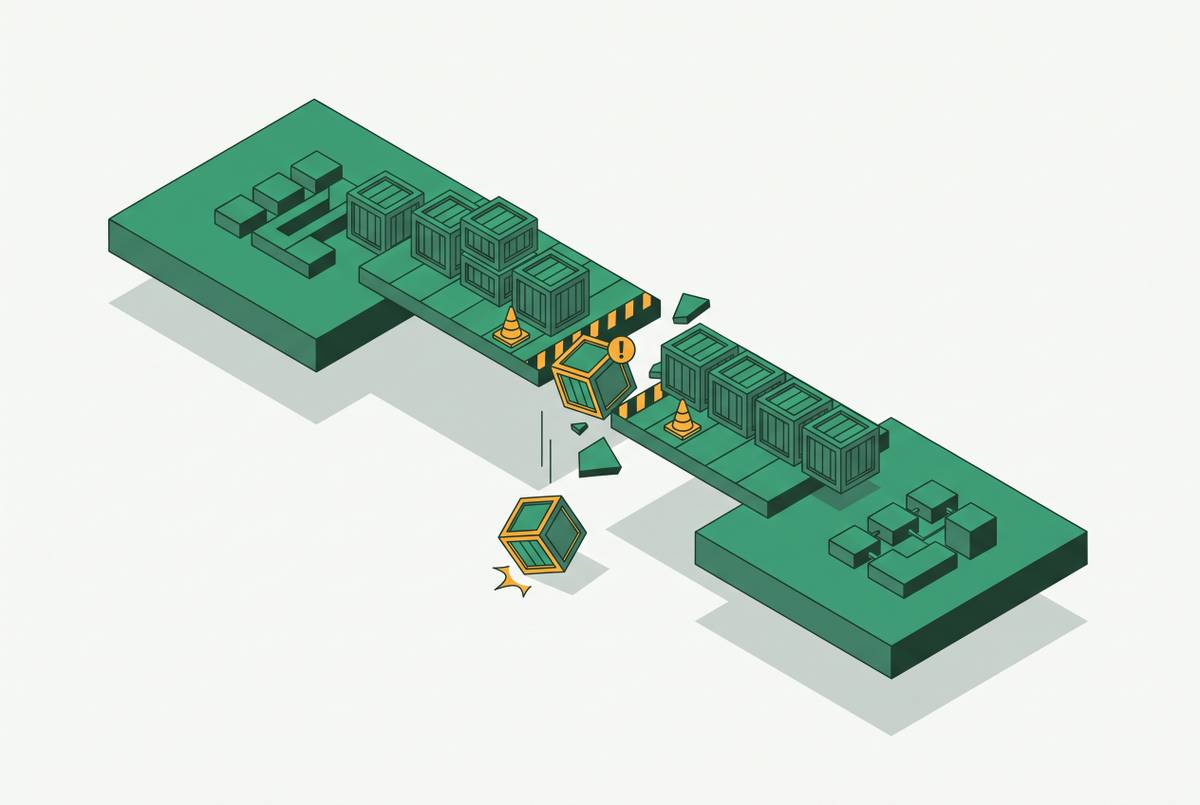
The single most common gap between a commission software demo and the system's behavior in production is that the demo runs on a curated dataset where every deal is clean, every rep assignment is unambiguous, and every calculation resolves without friction. Those conditions rarely describe a real CRM export. The pattern shows up across software categories generally: the demo returns perfect results, the classification hits 98% accuracy, and then loading in the buyer's own data, with its missing fields, inconsistent naming conventions, and years of legacy formatting, drops accuracy. Commission software is not exempt from this pattern; it may be more exposed to it, because the inputs (deal records, rep assignments, rate tables) tend to accumulate exactly the kind of inconsistency that a demo environment is built to exclude.
The test is straightforward to run and hard for a vendor to fake. A vendor who hesitates to process the buyer's data live, or who suggests sending it over for results to follow later, is showing a specific kind of weakness: without a product working live with that buyer's own data, there's no real way to know it handles that buyer's own workflows. For commission software specifically, the right material to bring is a real CRM export: deals that closed mid-month, reps who changed territories partway through a period, products that trigger different rate tiers, and at least one deal that should trigger a clawback, then ask the vendor to run the calculation on it live. The question to ask directly is whether the demo can run right now on the average data the team actually works with. A platform built for production handles that request without flinching. One that needs to retreat to a clean room before it can perform is telling the buyer something important about what happens after signing. A vendor who agrees to the request but asks to take the file offline and return with results later has not demonstrated live capability at all; what's been demonstrated is the ability to prepare a second, equally curated demo.
Edge-case questions that deflect or get deferred reveal the actual ceiling of the system
A commission engine that correctly calculates one rep, one product, one rate, and a clean close date has proven almost nothing about whether it belongs in a real operation. The plans that generate disputes, errors, and shadow accounting in spreadsheets are never the simple ones. They're the ones with split credits, mid-cycle rate changes, accelerators, clawbacks, and retroactive quota adjustments, and those are exactly the scenarios demos tend to avoid walking through in any depth.
Tiered rates that activate at quota attainment thresholds, accelerators that compound differently across product lines, SPIFs layered on top of base compensation, split credits across overlapping territories, and clawback triggers that reach back across pay periods already closed are the complexity worth pressing on. Quota design deserves particular attention here, since quotas set without grounding in historical performance tend to feel arbitrary to reps and generate disputes well before a single commission check gets calculated; a platform that can only show attainment against a single flat number has no mechanism for handling plans built bottom-up from territory potential. A system that can't explain a complex payout clearly to the rep receiving it is a generator of shadow accounting all by itself, because reps who don't trust the number will keep their own spreadsheet to check it.
The useful move in the room is to bring two or three real edge cases pulled from the company's current plans and ask the vendor to model them live. If the vendor's response is some version of "great use case, we'll follow up on that," the ceiling of the system has just revealed itself before the contract was signed, which is the entire point of running the test this way.
Features described as "on the roadmap" are not features the buyer is purchasing
A vendor can demo a capability that doesn't yet exist inside the actual product. It can be mocked up, walked through on a slide, or described verbally with enough confidence that it reads as functional. Once the contract is signed, "we're building that now" becomes an open-ended wait with no enforced delivery date attached to it.
The clearest warning sign is when the specific features the buyer needs most are the ones consistently described as coming soon. Core capabilities should run live, in the product, during the demo itself, and a vendor should draw a clean line between what has already shipped and what remains in development, attaching real dates to anything not yet released. The probe here is simple: for every capability that made the shortlist, ask to see it working in the product today, not on a slide and not in a recorded walkthrough, and if it turns out to be on the roadmap, ask for a contractual delivery date rather than a verbal assurance. A vendor with a genuinely mature product can show the core of what it does and will be straightforward about what's still being built. There's a meaningful distinction between roadmap items the buyer doesn't need yet, which are fine, and roadmap items that are the actual reason the buyer is switching platforms, which are a problem. The evaluation scorecard built before the demo, the one separating non-negotiable requirements from nice-to-haves, is what makes that distinction possible to draw cleanly in the moment rather than after the fact.
What vendor evasion on commission data reveals
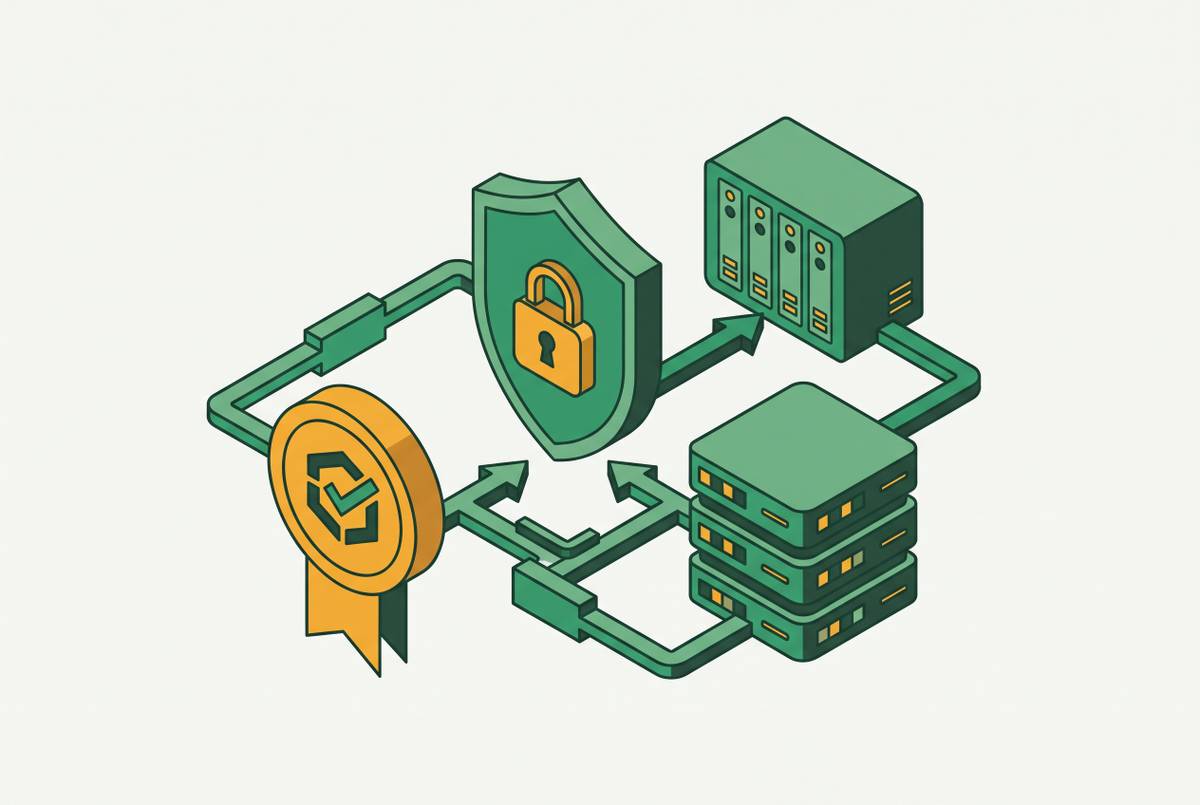
Commission data carries individual earnings, quota attainment, deal-level detail, and pay-period history. It sits among the more sensitive categories of operational data a company holds, on par with payroll, and a vendor unable to explain clearly what happens to it is either unable to answer or unwilling to, and neither possibility is acceptable given what's at stake.
Ask the vendor to describe exactly where deal data goes during a commission calculation, the mechanics, what happens the moment a deal closes in the CRM, which services touch that data next, what gets logged, what gets retained, and who has access to it. Vendors with a clearly understood data architecture answer this directly, because they know the answer. Vendors without one redirect toward a SOC 2 certification, an enterprise agreement, or a privacy policy document, none of which actually answers the question asked; they function as proxies standing in for an answer rather than the answer itself. A vendor who cannot walk a buyer through where that data lives at every step of its journey represents a compliance and data-privacy liability the buyer is about to inherit.
None of this is a case against security claims generally. Any vendor can say it takes security seriously, and the claim alone carries no weight. What matters is independent, third-party verification and specific controls that go beyond marketing language, SOC 2 Type II audited controls, SSO, MFA, the principle of least privilege, and service agreements that explicitly protect customer data. For commission software specifically, press for org-scoped tenancy (confirmation that one customer's data cannot be reached from another customer's environment), encryption both in transit and at rest, audit trails attached to every plan change and approval, and an explicit, stated policy on whether customer data gets used to train the vendor's models. That last point is not a hypothetical concern. A vendor who cannot confirm a no-training policy is effectively asking a company to expose individual reps' earnings data to a model training pipeline, and that is a policy question with a yes-or-no answer, not a matter of degree.
Pricing that looks simple at demo scale becomes unrecognizable at production scale
A vendor who quotes a single platform price without showing what that price becomes as the organization grows is presenting a demo-scale number in support of what is actually a production-scale decision. The quote sounds clean in the room for the same reason the data sounds clean in the room: it's been curated to sound that way.
Usage-based pricing itself isn't the problem; it's a normal and often fair model. A vendor unwilling to hand over the full breakdown before the contract gets signed is the problem. Setup fees, per-user costs, per-transaction charges, and integration fees that stay vague during the sales process have a way of reappearing, no longer vague, on the first invoice. Integration costs in particular tend to hide in plain sight: CRM connectors, ERP sync, payroll export, and SSO can each carry their own setup or ongoing fees that never appear in the headline number, so it's worth asking for a line-item breakdown covering every integration the company will actually need at launch. Ask for the full pricing in writing: the base fee, every per-user or per-use charge, every integration fee, and what the total looks like at current headcount, at twice that headcount, and at five times that headcount. A vendor with nothing to hide produces that breakdown without hesitation.
Pricing models tied directly to the structure of a compensation plan rather than to headcount alone offer a useful contrast to flat per-seat pricing, because they scale with what the organization is actually paying out rather than with how many logins exist. That distinction becomes more visible once a buyer has asked for the five-times-headcount number and watched how quickly, and how clearly, the vendor is able to produce it.
A vendor with no production failure story has either never been in production or won't say what happened
A pilot is not production. A pilot runs with a dedicated support team close at hand, a narrow and carefully bounded scope, and a safety net built into the whole exercise. Production means the system handles real transaction volume, real edge cases, and real failures with no one standing by to catch them. The right question for a buyer to ask isn't whether the vendor has pilot customers; it's whether the vendor has production customers, and what the worst production failure looked like, and how it got resolved.
References matter here in a specific way: not references the vendor hand-picked and prepared in advance, but customers the buyer selects independently from a longer list. A vendor confident in its own track record grants that kind of direct access without resistance. For commission software specifically, the sharper version of the question is whether the vendor can connect the buyer with a customer who went live within the past twelve months and who brought a genuinely messy CRM integration into the process. That reference, if the vendor can produce it and if that customer will speak about what broke along the way, tells a buyer more about the platform's real ceiling than anything that happens inside the demo itself.