Hard Close Enforcement in Commission Platforms and Why Soft Locks Keep Month-End Open Longer
Locked periods only work when the platform enforces them.
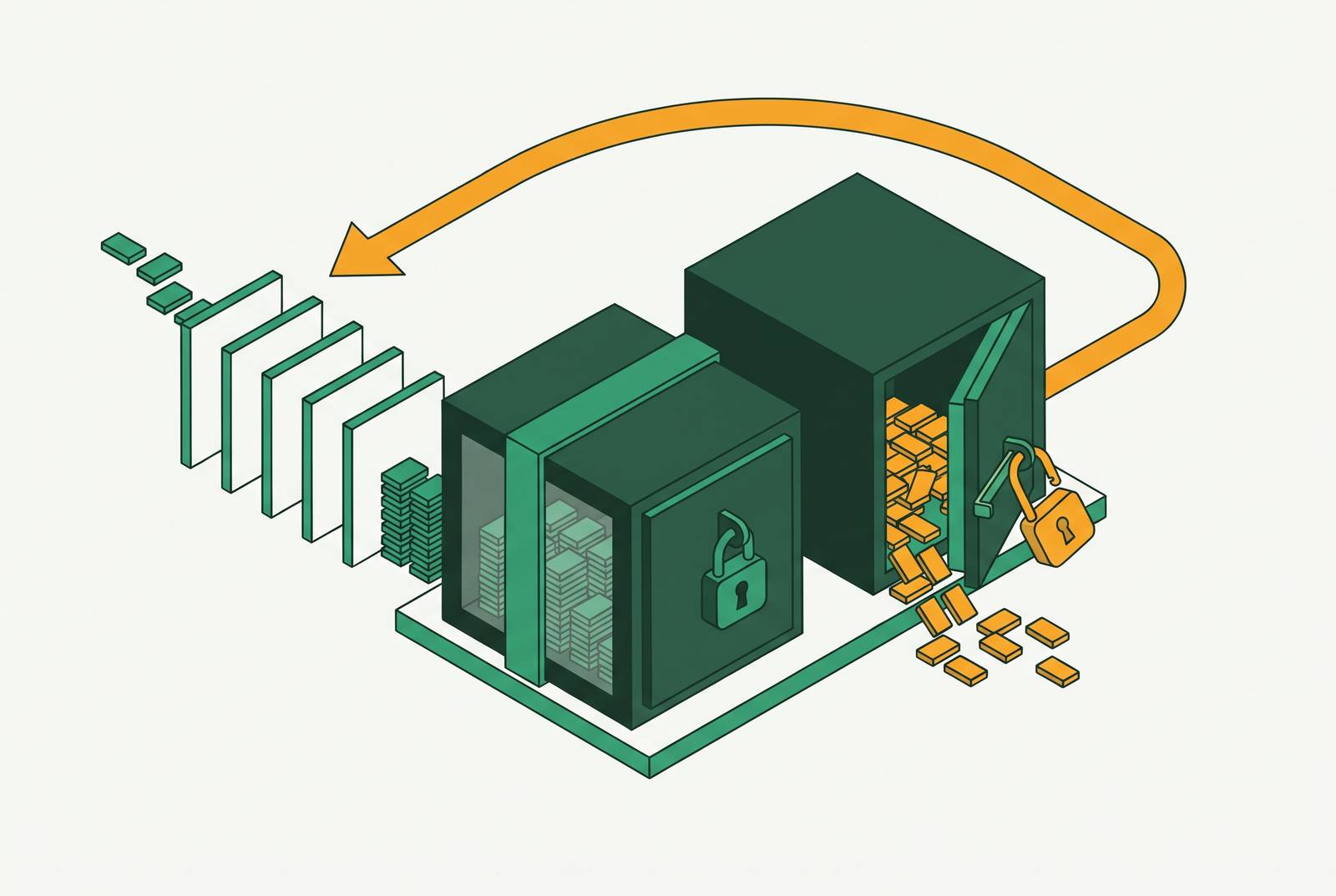
Commission software with locked pay periods and audit trails must enforce a data cutoff, fixed calculations, sequenced approvals, and documented exceptions for reopening. Hard-close enforcement makes those controls prerequisites for finality, while soft locks leave payouts adjustable after a period appears settled.
Why "closed" is not a binary state in accounting or commission platforms
Two people on the same finance team can argue about whether a period is “closed” while describing different milestones. One means the bank reconciliation is complete and leadership can see directional numbers. The other means every accrual is booked, every subledger ties out, and the period is locked against changes without a formal exception. Both are describing progress, but only one is describing finality.
In a commission platform, that ambiguity affects the status of actual payouts. A period may look settled to a rep or manager while remaining open to adjustments in the underlying calculations. The label alone does not establish the control. What counts is whether the system prevents further changes or merely signals that routine work is finished. Without that distinction, Sales and Finance can agree that the period is closed without agreeing on whether its numbers are fixed.
What a hard close and a soft close actually do, in mechanical terms
A hard close requires every account to be reconciled, every accrual to be booked, and every subledger to tie to the general ledger. Each material entry has supporting documentation. Once those conditions are satisfied, the period is locked, and reopening requires a formal exception.
A soft close serves a different purpose. It handles major accounts, estimates less significant items, and prioritizes timely internal management visibility over audit-readiness. Small accruals may be estimated, immaterial reconciling items deferred to the next period, and deep subledger tie-outs or full supporting documentation left incomplete. The numbers are directionally useful, but the period remains technically open under this approach. Hard and soft closes are therefore not simply slow and fast versions of the same procedure, because they leave different work unfinished and enforce different limits on subsequent changes.
How the soft close timeline advantage disappears when adjustments keep arriving
A soft close aims to finish roughly three to four business days after period-end, while a hard close usually takes five to seven business days. If adjustments keep arriving on days four through ten, each insertion can reset downstream calculations and restart review cycles. The earlier reporting milestone has not eliminated the unfinished work. It has moved that work beyond the point at which the period was described as closed.
This distinction separates speed to visibility from speed to finality. A team can deliver directional numbers sooner yet spend longer reconciling the period if each revision exposes it to another dispute. Undocumented steps, unclear ownership, and inconsistent reconciliation discipline make that process harder to contain. More post-close adjustments, reopened periods, or reports that leadership does not trust weaken the claim that the close has improved.
Commission periods are particularly exposed to this trade-off because their inputs do not reliably stop at period-end. A late change may alter not just a source record but the payout calculations dependent on it. That dependency extends the review work beyond the changed input itself.
Why commission periods are especially vulnerable to soft-lock drift
Late CRM deal updates, disputed crediting decisions, and retroactive quota adjustments all create pressure to recalculate an open commission period. These are not necessarily small corrections. A single retroactive quota change can change whether a rep reached an accelerator tier and every calculation that follows from it. As a result, an apparently isolated adjustment can invalidate work that reviewers believed was complete. An unlocked period allows those inputs to keep changing the basis of the payout.
Spreadsheet formula drift adds a separate route to the same problem. In a spreadsheet environment without enforced controls, a user can overwrite a formula cell without triggering a warning. A typo buried in a nested IF statement can silently miscalculate an entire column of reps. The error may remain unnoticed until a rep challenges the result, sometimes pay periods later. This is a concrete mechanism for reopening work.
Together, changing inputs and editable calculations make finality difficult to establish. Finance and RevOps can face compounding errors and multiplying disputes even after routine reconciliation has ended. Plan changes then become both a governance problem and a calculation problem. Without a hard lock, the period is merely unattended until another correction or dispute brings it back into active work.
What hard-close enforcement actually looks like inside a commission platform
The first dependency is a defined data cutoff, after which the platform stops accepting new CRM inputs for that period. Later deal updates move into the next period or require a formal exception workflow. This freezes the dataset against which calculations will run. Without that boundary, a reviewer cannot know whether the inputs will remain the same after approval.
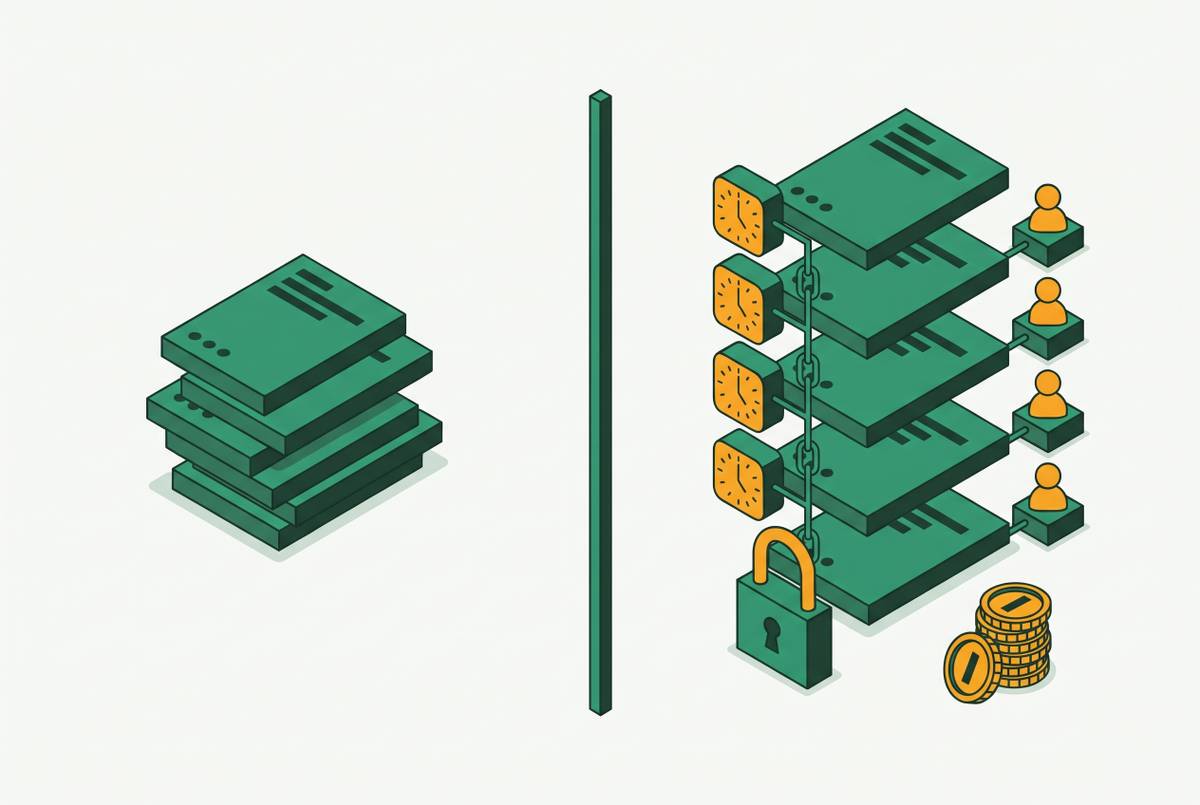
The calculation lock depends on that frozen dataset. Once calculations run, the results are fixed, and any recompute requires a traceable audit entry recording who triggered it, when, and why. The statements then go through a set approval chain: rep acknowledgment, manager sign-off, and Finance approval. A statement that has not cleared every stage cannot be included in a locked period. Approval thus applies to a controlled result, rather than a number that can silently change underneath it.
Only after those approvals can the period be sealed. Retroactive changes require a formal reopening exception that creates an audit record and restarts the approval chain for affected statements. Effective-dated rules are a prerequisite for this sequence because a mid-period plan change must apply to the correct portion of the period. Without precise effective dates, split-period calculations need manual workarounds that go around the gates. A platform must enforce these state transitions from calculation through statement readiness.
The downstream cost when the period lock is missing or unenforced
For sales reps, the most immediate consequence is uncertainty about whether the payout can be trusted. Shadow accounting is the clearest expression of that uncertainty. Reps maintain private spreadsheets because they do not believe the numbers they are paid, spending selling time recalculating their compensation. That productivity loss compounds across the team. A process that appears complete to Finance can therefore remain unresolved for the people receiving the payments.
Those doubts bring Finance and RevOps back to reconciliation again and again. A disputed period draws the teams back into calculations and crediting decisions they believed were settled. Negotiation between Sales and Finance displaces verification in the last days of the month. Finance’s credibility is weakened when a completed review does not establish a dependable result.
As organizations scale, the scrutiny also shifts from payout outcomes to the process that produced them. Auditors and internal controls teams need to trace a payment to its source data and the specific rule applied. SOX and revenue recognition standards make control and accounting discipline relevant to that scrutiny, though a period lock alone does not establish compliance. Logged approvals and locked periods support the required trace. Without them, a correct final number does not demonstrate that the compensation process was controlled.
Why over-complex commission plans make hard-close enforcement harder to sustain
Platform controls cannot remove the disputes generated by an unexplainable plan. A compensation system must clearly articulate how a specific payout was derived so that the rep can verify it independently. Accuracy alone does not resolve that problem. Even a correct calculation can produce a trust failure when its logic is opaque, creating the same shadow-accounting behavior as an actual error. When a plan is easy to explain, reps have less reason to raise late challenges that would test the close.
Payout timing creates another upstream dependency. Payment at booking, invoicing, or cash collection ties the cutoff to different events, while misalignment with financial recognition increases friction between Sales, Finance, and leadership. The plan-design response is to define payout triggers explicitly and align them with broader revenue recognition practices. That cuts down on the late inputs that feed soft-lock drift. It also establishes which event must be settled before the commission period can close.
Plan revision cadence affects the same boundary. Frequent mid-year changes break the flow of calculations and lead to more exception requests that can force periods back open. A formal annual revision cycle with adequate notice to reps reduces retroactive disputes. The purpose is not to make the plan inflexible, but to avoid generating preventable exceptions that the close process must repeatedly absorb.
Where commission accuracy actually originates — the CRM integration dependency
The CRM is the system of record for deal data, while the commission platform translates CRM events into payouts. A hard close can freeze that translation, but it cannot make delayed inputs timely. Integration quality is therefore a prerequisite for close reliability. If data moves through manual exports, the commission platform may lock a snapshot that is only as complete as the last transfer made it. The lock controls later changes but leaves doubts about what is already in the dataset.
Direct, real-time integration for deal data, quota changes, and territory assignments closes the latency gap that creates late inputs. Periodic manual exports leave that gap at the transfer step. Consider a deal that closes in the CRM at 11:58 PM on the last day of the period. Does the commission platform capture it automatically in the current period, or wait for the next manual sync? The answer exposes whether the cutoff operates on timely source data or on the most recent available export.
For platform evaluation, that dependency deserves more scrutiny than a feature list. The benefit of automation rests on commission data flowing from CRM events rather than through human-mediated steps that reintroduce delay and error risk. A reliable cutoff needs a reliable feed. Otherwise, hard-close enforcement can keep the inputs it received fixed while Finance deals with what arrived too late.
How to evaluate commission software with locked pay periods and audit trails
Buyers should test whether a “closed” status reflects enforced behavior. The first test is whether the platform defines a hard cutoff time for CRM inputs and prevents late deal data from entering without a logged exception. A system that takes every update until someone manually freezes the period still has a soft lock by default. The distinction becomes visible at the boundary. The platform must control what happens after the cutoff.
The second test concerns recalculation after initial results are produced. A recompute trail should identify who triggered the rerun, when it occurred, and what changed. Without that record, approvers cannot check the number they are asked to sign off on. The third test follows directly from it. Buyers should establish whether every statement must clear every approval stage before locking, or whether a manager can close the period with unapproved statements still open.
The fourth test is a request to reopen a locked period. Genuine enforcement requires documented justification and an audit record when an authorized user reopens a period. The fifth test is a mid-period plan change. The platform should apply the old rule to deals before the effective date and the new rule afterward, automatically and traceably, without manual overrides that bypass the gates.
These tests establish what a platform prevents and what it permits through controlled exception. They do not establish that reps will never dispute a payout after payroll runs. Clear explanations and defined approvals reduce avoidable disputes, while formal reopening governs corrections that still arise.