Payroll Export Formats and Commission Data Handoff to Payroll Systems
Commission errors become unfixable once payroll ingests them without verification.
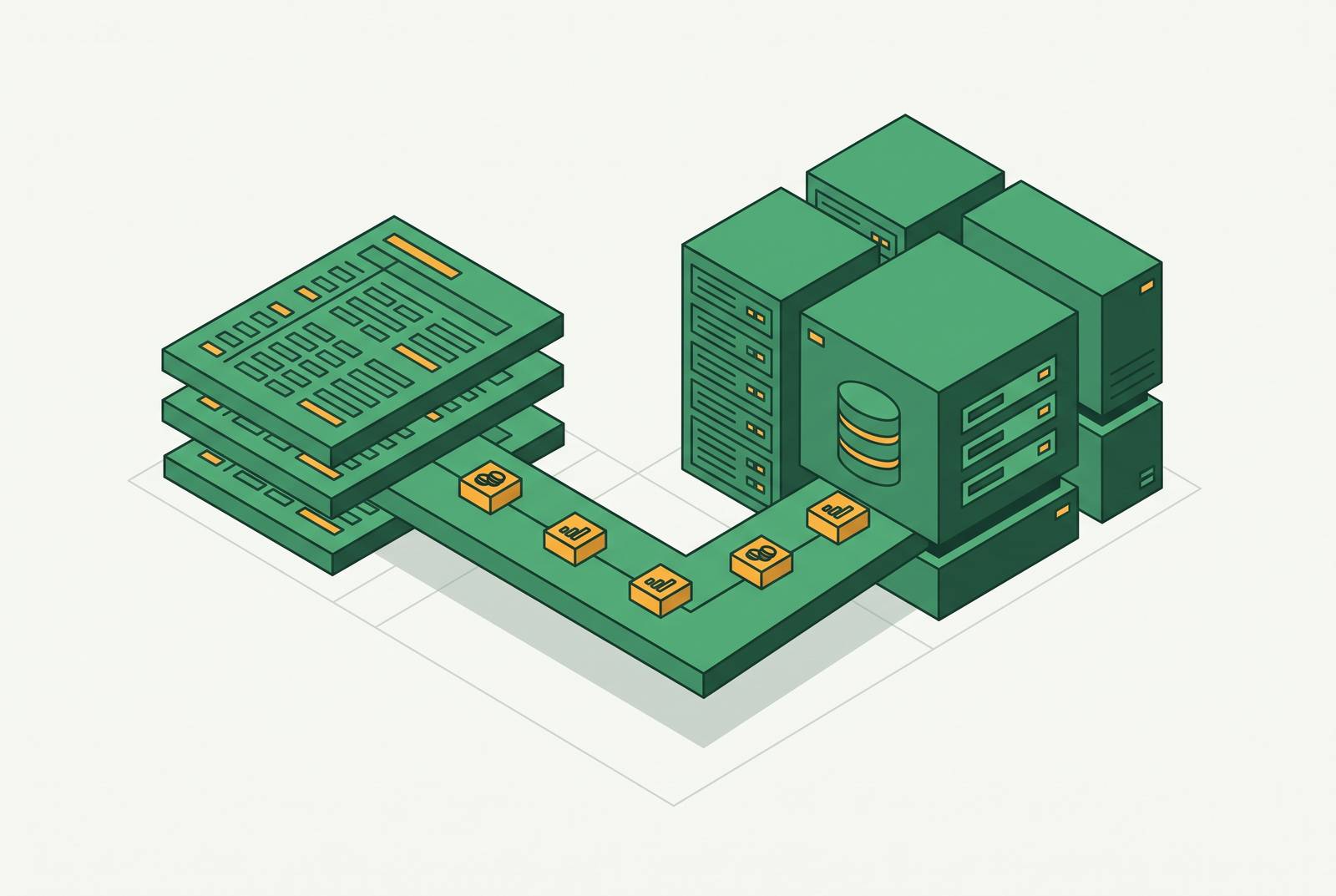
The commission figure crosses into payroll as a finished number, and from that moment it is treated as fact. The payroll system cannot question whether the rate was right, the deal was credited correctly, or the clawback was authorized. That is why the handoff is the last place an error can be caught before it becomes a pay error, and it is the place where errors most often go undetected until a rep notices the wrong deposit.
Why the commission-to-payroll handoff is where calculation errors become pay errors
The handoff is the final control point in the commission process. Every error that entered upstream, a wrong formula, an incorrect rate, a deal amount entered incorrectly, survives the export process intact because the payroll system has no mechanism for knowing that a figure is wrong. Payroll ingests what it is given and pays it.
The handoff also fails in its own ways, on top of whatever errors already came in from upstream. Manual re-entry of numbers, mismatched field names between systems, incorrect employee identifiers, and untransformed data structures are all independent opportunities for error that occur at the point of transfer, not before it. These errors are separate from any problem in the calculation itself.
Both categories of error share the same consequence. The correction always touches two systems, the commission platform and the payroll platform, so RevOps and Finance must coordinate under conditions neither team chose. What makes this handoff distinctive is that it is where the errors stop being correctable within the commission system and become distributed across the organization's financial records.
What payroll export files actually contain and how they are structured
A payroll export file is a structured mapping of compensation fields to payroll system identifiers, and its fitness for purpose depends on format, field completeness, and identifier alignment, not just on whether the numbers are right. The file's job is to let a receiving system match each commission figure to the correct employee, earnings type, and pay period without human interpretation. Format is not always a matter of preference. The New York State Department of Labor Certified Payroll portal accepts only XML for bulk upload, not CSV, so format choice is a compliance requirement there. The appropriate format is determined by what the receiving payroll system accepts, not by what the commission system finds easiest to generate.
Field mapping is where most practical handoff failures occur. Each payroll system expects its own field names and identifier schemes, and a commission export must match them exactly. The Condensed variant of ADP Workforce Now uses the same identifier fields but consolidates regular and overtime hours into single line items per employee and omits the Temp Department column, a structural difference that affects downstream reporting.
Other systems use their own identifier schemes. Gusto and Employer's Guardian map only an Employee ID. iSolved requires unique Pay Item codes, EREG for regular hours, EOVT15 for overtime, ETRAV for travel, EPTO for PTO, EHOL for holiday, and ESICK for sick time, each configured in advance within the receiving system. The pattern across all of these is the same: the commission system must store the payroll system's own identifiers for each employee and location. The handoff fails if those identifiers are missing, mismatched, or stale.
That is why commission software that stores payroll system IDs, the ADP Company ID, the Employee Ref. ID, the pay item codes, as part of plan configuration matters. ID is the critical linking field. It connects a commission figure to the correct employee record in the payroll system, and any mismatch, a changed ID, a new hire not yet configured, a terminated employee still in the active list, breaks the import.
What commission data must include before it is export-ready
A file in the right format with the right field names still fails if the commission data inside it is incomplete, unlocked, or unreconciled. Export-readiness is a data quality gate, not a button. Payroll can only act on a commission export without reconciliation if the file carries a minimum set of fields: the employee identifier matching the payroll system's scheme, pay period dates, the gross commission amount, the earnings type or pay code, and any deductions or clawbacks applied.
Earnings type classification is increasingly a compliance requirement, not just a labeling convenience. The 2026 OBBBA payroll reporting requirements introduced newly defined W-2 reporting codes and expanded income classifications that require separate tracking for specific categories of compensation. Automated earnings-code mapping is the practical response, because manual mapping at export time dramatically increases misclassification risk, especially across multiple states.
Deal-level detail behind the summary figure matters even if payroll only ingests the total. The rep needs to be able to reconcile their statement, and finance needs to be able to audit the number back to source deals. A gross figure with no underlying detail may process cleanly today and become an audit problem tomorrow.
Data must be locked before export. Export-readiness is a state the commission data must reach before export happens, not a state the export process creates. Deal-level detail, locked pay periods, and earnings-code classification all need to be complete and validated upstream, which is why enforcing data quality gates and approval workflows before export becomes the foundation of a clean handoff to payroll.
How approval locking turns a calculated figure into a trustworthy export
Locking a pay period before export is the control that prevents the export file from becoming a snapshot of a moving target. It is what makes the number the rep sees and the number payroll processes the same number. Without a locked state, a commission figure can be edited after it has been reviewed and before it has been exported, or after it has been exported and before payroll processes it, creating a gap between the rep's statement and the payroll record.
A locked pay period means the calculation is frozen, the approval is logged, and the export reflects exactly what was approved. The audit trail is the practical output of locking: an approval-locked record carries a log of who approved it, when, and what the figure was at the time of approval. This is what finance needs for accrual reconciliation and what compliance requires for pay data reporting.
The alternative, exporting from an unlocked or unapproved state, means payroll is acting on a figure that no one has formally confirmed. Any error discovered afterward requires a correction that touches both the commission system and the payroll system, the most expensive kind of correction there is. The handoff becomes a transfer of an immutable record rather than a handoff of a changeable calculation.
Where spreadsheet-driven handoffs break down and why the failure compounds
Spreadsheet-based commission processes fail at the handoff not because spreadsheets miscalculate, but because they have no locking, no approval state, and no audit trail. There is, structurally, no trustworthy figure to export. The problem is architectural, not behavioral. A spreadsheet cannot enforce a state it does not have. Formula drift is the most common failure mode. The audit trail is whatever the person making the change remembered to document.
Scale accelerates the problem. When reps stop trusting the official number, they maintain their own parallel tracking, so every disputed payment requires reconciling two records instead of one. A spreadsheet handoff at scale does not just risk errors. It creates the conditions under which errors are discovered late, disputed often, and corrected expensively.
How commission plan design determines the complexity of the export payload
The complexity of a commission export is largely determined before any data is exported, by how many variables, roles, credit splits, and timing rules are baked into the compensation plan. Every plan feature that adds flexibility for reps adds a field, a rule, or a conditional that must be correctly reflected in the export. Plan design and export design are not separate decisions.
Simple plans produce simple export payloads. Multi-role deal environments generate the most complex payloads: when an SDR, an AE, and a solutions engineer all receive credit for a single deal, the export must carry separate lines for each, with amounts that sum correctly and reference the same source deal. The export file carries the result of applying a tier, not the tier itself, and payroll has no way to verify the rate was applied correctly without deal-level documentation.
Clawbacks create negative entries that payroll systems must be configured to accept. Payout timing rules, whether commission triggers on booking or on cash collection, affect which period the commission appears in the export. Misalignment between the commission system's trigger and the payroll system's period creates entries that land in the wrong pay cycle.
What payroll teams need from the handoff to process without reconciliation
Payroll teams cannot verify commission figures on their own. The export must carry a reference to the pay period that produced the figure, so any question can be traced back to a locked, approved state. And the file must carry documentation that the figure has been approved, an approval timestamp or a locked-period reference that payroll can point to if the figure is questioned.
What payroll cannot do, and what commission teams sometimes assume they can, is verify that a commission rate was correctly applied, confirm that the right deal was credited, or determine whether a clawback was properly authorized. These questions must be answerable from the commission system, not from payroll. A commission figure that arrives without a correct classification, or that collapses distinct earning categories into a generic bucket, creates downstream reporting risk that no payroll team can fix retroactively.
The data consistency principle governs the entire handoff. The commission number that feeds payroll should be identical to the number the rep sees in their own statement. Any gap between those two figures is a trust problem before it is a compliance problem, and it is a trust problem that no amount of downstream reconciliation can fully repair.
How to structure the RevOps-to-Finance handoff process around the export
A clean payroll export is the output of a defined process, not a one-time achievement. The handoff works when RevOps and Finance have agreed on what export-ready means and who is responsible for confirming it before the file leaves the commission system. Finance owns the outputs: payroll processing, accrual booking, and compliance reporting. Finance should not be discovering commission errors at the point of payroll processing.
The handoff gate sits between them. This gate is where RevOps signs off and Finance takes ownership. Setup errors discovered at export time delay payroll.
The biggest operational risk is a handoff that happens on a deadline. Building the process backward from the payroll deadline, with defined checkpoints for CRM data close, calculation review, manager approval, and export, is what separates a repeatable handoff from a monthly scramble. The sequence becomes a calendar discipline rather than a sequence of improvisations.
What to look for in commission software to support a clean payroll handoff
The commission software that produces a trustworthy payroll export is the one designed around the constraints of the handoff. Format flexibility, approval locking, audit trails, and identifier management are not optional features. They are the baseline for a clean handoff. CSV works for many systems, but some regulatory and enterprise payroll environments require XML, and the platform must support both.
Approval locking and period closure are non-negotiable. Employee identifier management means the platform stores and maintains the payroll system's own identifiers for each rep, not just internal IDs, so the export file maps to the payroll system's employee records without manual translation. Earnings type classification must support commission pay as a distinct earnings type, not collapse it into a generic wage line that creates misclassification risk under tightening reporting requirements.
Rep-facing transparency is the final criterion. Quota Queue is built around the sequence this article has described: deal data imports from CRM or file upload, compensation plans are built using AI-assisted extraction from existing documents, which proposes quotas, rates, tiers, accelerators, SPIFs, and clawbacks for review, then approved and published. The export is the output of a completed, approved process, not an intermediate step, and the platform is priced by the number of active compensation plans rather than by seats, so the cost of adding reps does not make payroll export features inaccessible to growing teams. The handoff is the test of the commission process. A platform that treats export as the final step of a structured, approval-gated workflow is one that payroll teams can trust, and that trust is what keeps the correction cycle from beginning in the first place.