How Compensation Plan Count Becomes the Right Unit for Commission Software Pricing
Per-plan pricing aligns commission software costs with configuration complexity, not headcount.
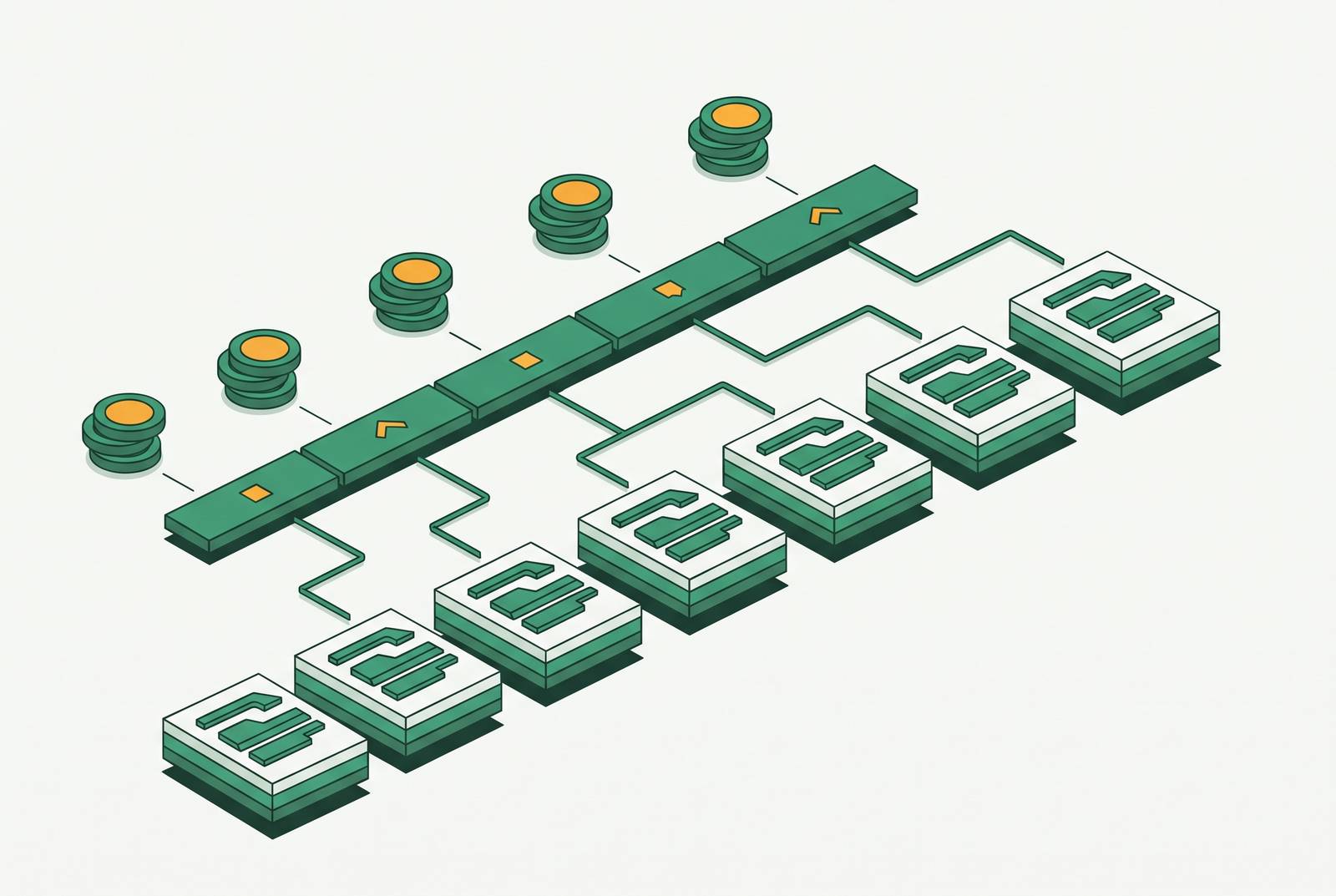
Per-plan commission software pricing charges by the number of distinct compensation plans the system manages. It aligns the bill with the rules the software must configure, calculate, and maintain. For teams seeking commission tracking software with pricing independent of user count, this model keeps the price unchanged as new hires join existing plans, while spending changes as compensation rules grow more complex.
Why the commission calculation workload is defined by plans, not people
A compensation plan is an independent logical object. It has its own quota structure, attainment curve, credit allocation rules, pay mix, payout trigger, and exception handling. Those rules set how a deal turns into a commission payment. The number of people who log in does not describe that logic, nor does it reveal how many different sets of rules the system must support.
Siplify's 2026 framework states that one plan cannot serve everyone because plan design must reflect the specific motion of the role. A shared sales organization can therefore contain several distinct calculation structures, even when its members work from the same deal data. The software must preserve those differences.
Consider two companies with the same number of reps. One uses several distinct plan structures, while the other pays everyone a single flat rate. Their seat counts match, but their configuration requirements do not.
Why per-seat pricing is a borrowed convention that doesn't fit commission software
Per-seat pricing is a common way to charge for SaaS. Per-user-per-month pricing makes sense for document editors, communication platforms, and CRM access, where the number of people who use the tool shows how widely it is used. Commission software has a different center of complexity. The work of configuration depends on the compensation rules, and the software uses those rules to calculate pay from deal data for the reps on each plan.
That difference produces opposing distortions for buyers. A high-volume inside sales team on a single tiered structure pays for many seats despite reusing the same configured logic. A specialized enterprise team with fewer reps may need overlays for each role, product, and territory. The first pays more relative to its plan-management workload, while the second generates more configurational complexity than its seat count suggests.
Finance and Procurement can immediately understand “X seats × $Y/month,” connect it to a hiring forecast, and place it within familiar budget line items. That predictability has genuine value. A pricing model does not become unsuitable merely because another model describes the product more precisely.
A seat-based bill can be easy to forecast while still measuring the wrong source of work. The case for plan-count pricing is therefore not that per-seat pricing was designed in bad faith. It is that a convention suited to access-based tools does not adequately describe a system whose central job is managing distinct incentive structures.
How plan count grows faster than headcount as organizations scale
Plan count also changes on a different trajectory from headcount. Hiring adds people, but role differentiation, product expansion, and quarterly iteration add new rules to the organization already in place. Those changes can compound. A role-specific plan may later need product-specific treatment, then a territory overlay, without any corresponding increase in the number of reps.
Complexity grows within roles as well as between them. Multi-role deals call for choices about primary and secondary credit, eligibility limits, and how to split credit among the people on the deal. Those choices can lead to new versions of plans for people already on the team. The headcount forecast cannot reveal them because the change concerns how people earn.
Further additions accumulate on top of those structures. SPIFs, accelerators, decelerators, ramp modifiers, clawback rules, and expansion versus new-logo splits can all change compensation logic without requiring a hire. An addition may or may not count as a separate billable plan. In either case, the software must account for a difference in how people are paid that seat count alone cannot show.
As hiring accelerates, seat count can become a better proxy for the growing volume of calculations. Yet go-to-market complexity typically outpaces headcount growth, making the number of independent rule structures increasingly important. Per-plan pricing follows that second trajectory.
What the software actually does for each plan it manages
Configuration translates compensation policy into executable calculation logic. For each plan, the software must represent tiered rates, quota thresholds, credit splits, and payout triggers so that the applicable rules determine the payment. This is the labor-intensive work of making the incentive structure calculable, and it does not repeat merely because another rep joins the same plan.
Calculation then applies that logic to live deal data every period, across every rep assigned to the plan. People still affect this part of the workload. The computational burden depends on plan complexity multiplied by the reps on that plan, rather than on the total number of users with access to the system. This distinction prevents the pricing argument from becoming an absolute claim that headcount has no operational effect.
Auditability adds a separate, persistent requirement. Sales Comp Lab identifies auditability as a core design requirement, with payouts traceable to source data and the rules applied. The software therefore keeps a separate audit record for each plan in each period. A final payment total alone cannot fulfill that requirement because it does not establish which inputs and rules produced the result.
Plans accumulate revised thresholds, credit allocation rules, modifiers, and exceptions, so the software must maintain their executable logic over the life of the plan. A plan's ongoing administration is part of the work that a plan-based pricing unit represents, even if the number of assigned reps does not change.
Explainability makes the calculation intelligible at the payout level. Each payment must be decomposable into identifiable inputs, applied rules, and final outcomes. That structure enables rep-facing visibility into earnings because the result remains connected to the logic that produced it. Auditability establishes the traceable record, while explainability makes the components of that record understandable.
Together, these commitments make a plan a legible unit of value. They also establish a boundary for the argument. Plan count shows how many distinct structures the software supports, though the work of computing pay can differ from plan to plan.
How spreadsheet failure makes plan-count complexity visible
Spreadsheet breakdown exposes the same underlying unit of complexity. Spreadsheets are not built to manage multiple independent plan objects at once, so each new plan adds to the work of keeping data, formulas, and revisions in step. Commission data is kept apart from CRM events, and calculations rely on manual imports that must work with a growing set of rules.
A user can overwrite a formula cell without triggering a warning, while a typo inside a nested IF statement can silently miscalculate an entire column of reps. The error may remain unnoticed until a rep challenges a payout, sometimes pay periods later. In a multi-plan workbook, the problem is not merely one incorrect cell but the difficulty of maintaining independent calculation logic reliably.
Version conflicts create another form of uncertainty. Two operations managers can work from separate copies of a file without a single source of truth, and the problem multiplies when plans occupy separate tabs or files. A disputed payout may then expose gaps in the record of which rules ran, what data fed the calculation, or who made a manual adjustment.
Product expansion adds further surfaces for misalignment. Product-to-commission mapping must synchronize product categories, pricing structures, and commission rules across plan logic, with each additional plan introducing another place for those relationships to diverge. The spreadsheet exposes the difficulty of managing the underlying distinctions without a plan-level structure.
The same source distinguishes plan design from operational execution and identifies manual or ad hoc execution as a source of errors, inconsistencies, and retroactive adjustments. That distinction explains why a well-designed incentive plan can still be administered unreliably. Pricing does not repair spreadsheet architecture, but plan count makes the workload visible when evaluating tooling intended to replace it.
How growing sales organizations avoid paying more every time they hire a new rep
A team can double its headcount without triggering a pricing increase if the new reps join an existing plan. The configured rule structure stays the same, though the software calculates pay for more people.
The reverse applies when compensation design expands. A new product line, territory overlay, or role with a distinct compensation motion increases the bill when it introduces a new billable plan object. Expansion costs more because it requires another structure to manage.
For Finance and RevOps, this changes the basis of forecasting. A seat-based forecast follows hiring, even when the incentive structure stays the same. A plan-based forecast follows the distinct structures the organization expects to introduce and maintain. That alignment can remove the adoption disincentive created when rapid hiring increases the software bill at the moment a growing team needs more reliable commission administration.
The procurement objection is definitional and legitimate. Is a SPIF a plan, and is a ramp modifier a separate plan or an attribute of the base plan? Plan-count pricing must answer those questions through a clear taxonomy of what constitutes a billable plan. Without that boundary, the model replaces familiar seat arithmetic with an uncertain count.
The buying criterion is therefore more precise than a promise of unlimited users. Buyers need a clear distinction between an existing plan attribute and an independently managed, billable structure. A model that supplies that distinction makes the relationship between design decisions and spending understandable. It also allows Finance to budget for operational complexity.
What Finance, RevOps, and sales reps each gain when pricing aligns with plan complexity
Finance gains a pricing unit that corresponds to the incentive structures it must reconcile, audit, and report on. What Finance spends on the platform follows those structures, while decisions about headcount are outside its control. The operational counterpart is a plan-level auditable record. Locked pay periods and logged approvals become part of what the platform delivers for each plan, connecting the purchased unit to the financial controls required to administer it.
RevOps gains a reason to examine plan sprawl. When each distinct plan has a cost, retaining redundant variants indefinitely becomes an explicit operational and financial choice. Sales Comp Lab identifies plan simplicity and reduced exception logic as best practice. Plan-count pricing reinforces that discipline by giving consolidation a direct relationship to platform spending, without treating every additional rep as additional design complexity.
Sales reps gain from the explanation structure attached to their plans. The same source identifies perceived fairness and understanding of compensation as key predictors of engagement. A plan represented as a first-class object, rather than a row in a shared spreadsheet, supports deal-level statement detail that helps build trust. Pricing aligns the commercial unit with the structure that makes visibility possible.
A platform that pulls deal data, quota changes, and territory assignments directly from systems of record eliminates the manual import step that introduces latency and error. Each plan's calculation can then draw from live data. The structural improvement is not a different label on the invoice, but a closer fit between what the buyer pays for and the compensation work Finance, RevOps, and reps depend on.